Poolside

“Inside the city, near the Sheep Gate, was the pool of Bethesda…One of the men lying there had been sick for thirty-eight years. When Jesus saw him and knew he had been ill for a long time, he asked him, ‘Would you like to get well?’” (John 5: 5,6 NLT)

I used to read this passage and think to myself that it was strange that the Lord would ask the paralyzed man if he wanted to be well. After all, who wouldn’t want to be healed of an infirmity that had rendered them an invalid? What person in their right mind would want to remain in a paralyzed condition? The truth is, as crazy as it may seem, sometimes; we can actually become at ease with our “disease.”

Sadly, many of us are guilty of allowing the pain and hurts we have encountered to produce a “victim mentality” within us whereby we feel justified in using our infirmity to manipulate others. I wonder if perhaps that is why Jesus asked the man lying beside the pool of Bethesda that day if he wanted to be healed. Maybe the man had actually begun to see his illness as a way to manipulate others into giving him money. Have you ever met someone who has actually begun to “romance” their pain and hurt? It’s crazy, but sometimes, we can prefer the familiarity of our suffering over the prospect of being made whole.

You recall the story of how God delivered the people of Israel out of servitude in the land of Egypt. Well, isn’t it strange that when the going got rough, as they traveled through the desert; they actually wanted to return to slavery? They had begun to feel sorry for themselves, thinking that Moses (and perhaps God) had somehow victimized them. They saw the familiarity of slavery in Egypt as preferable to the hardships of a free people. It appears that they sought to manipulate Moses (and perhaps even God) through their whining and complaining. “Let us go back to Egypt; it’s better to be a live slave than a corpse out here in the desert!”

Let me ask you, do you want to be made whole? Will you come and allow Jesus to heal you and set you free? You don’t have to be an invalid resorting to murmuring and manipulation. The sin, the hurt, and the pain that has you paralyzed cannot stand before the One who has come to give you life! Poolside is not the place for you. Put your faith in Him today, and hear Him say to you, “Take up your mat and walk.”
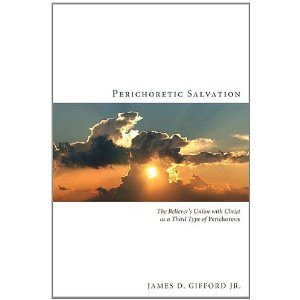

 

Perichoretic Salvation (Dr. James D. Gifford)

I want to tell you about a book that I really believe can change your life. I had the privilege of having Dr. James D. Gifford as a professor, and he has written a book entitled,  Perichoretic Salvation: The Believer’s Union with Christ as a Third Type of  Perichoresis, which I think is simply awesome.  I took the  pericope below off of the back cover and I hope it will entice you to click on the provided link, and get your own copy. Perichoretic Salvation by James d. GiffordI know the man, and I absolutely encourage you to get his book!

“For two thousand years, Christian theologians have struggled to explain the believer’s union with Christ. What sort of union is this? How can it fully be described? This book is an attempt to join the conversation to explore exactly what it means to be in union with Christ. This book will argue that the believer’s union with Christ can be rightly presented as a third type of perichoresis. Perichoresis is a word that describes the way the persons of the Trinity interrelate, without losing their essential oneness nor without being absorbed into each other. In short, the doctrine of perichoresis preserves the unity and diversity within the Godhead. It is also used to describe the hypostatic union of the divine and human nature in Christ. In Perichoretic Salvation, James Gifford argues that the union of the believer and Christ is a relationship of the same kind, though of a third type. Arguing from a perspective that is rooted biblically, historically, and theologically, the book will allow the union to be explained more fully than in the past while remaining within the bounds of what the church has taught over the centuries. It mat prove to be a basis for understanding the work of Christ afresh for the twenty-first century.”

http://www.amazon.com/Perichoretic-Salvation-Believers-Christ-Perichoresis/dp/1610971140

Bethlehem: The House of Bread

[Jesus was saying to them] “Anyone who eats the bread from heaven, however, will never die. I am the living bread that came down from heaven. Anyone who eats this bread will live forever; and this bread, which I will offer so the world may live, is my flesh.” (John 6: 50,51 NLT)

When you read John 6, you definitely don’t see a picture of Jesus trying to win followers with an “ear tickling” message. In fact, we find that as a result of some of the things he said to the people that day; many stopped following him. He began to speak of “eating his flesh,” and “drinking his blood,” and it freaked a lot of folks out. But really, God had provided hints of all of this that first Christmas night when Jesus was born.

The Bible tells us that Jesus was born in Bethlehem. And do you know what the word Bethlehem means? It means “house of bread.” Let’s go a bit further. We are told that on the night of Jesus’ birth he was laid in a manger. And a manger is where the animal’s food was placed. I don’t think this is a coincidence. I believe that God was giving some clues in how and where Jesus was born. The child that lay in the manger that night in Bethlehem is the “food” God has provided for man to eat resulting in eternal life.

See, that’s the point of Christmas, God the Son becoming man and giving himself for us.

In John 6, the people reminded Jesus that Moses had given them manna to eat when they had come out of Egypt and wondered through the desert. The Jews that heard Jesus speak that day in John 6 were an oppressed people, suffering under the hands of the Roman Empire, and they were trying to manipulate Jesus into giving them bread under the pretense of “just wanting to believe.” Jesus told them that though their fathers had eaten the manna, they had nevertheless died. He corrected them by saying, “I tell you the truth, Moses didn’t give you bread from heaven. My Father did. And now he offers you the true bread from heaven. The true bread of God is the [O]ne who comes down from heaven and gives life to the world.” He continued with, ““I am the bread of life. Whoever comes to me will never be hungry again…”

Listen, if all Jesus is, if all Christmas is to you is the little baby born in Bethlehem that night long ago, you have missed it. The Son became flesh so that you might participate (“eat my flesh” and “drink my blood”) in the very life of God. He was born in Bethlehem, the “house of bread,” and placed in a manger from which the animals ate their food, and he now invites you to come and partake of him so that you may live.


“Divine Therapy”

“As God prepares remedies for the body from therapeutic herbs wisely mixed together, so he also prepared for the soul medicines with the words he infused, scattering them in the divine Scriptures…. God gave yet another medical aid of which the Lord is the Archetype who says of himself:  It is not the healthy who have need of a physician but the sick‘. He is the excellent physician able to heal every weakness, and illness.’” (Origen, Homilies on the Psalms.)

 The holidays are that time of year that affords many the opportunity to interact with family members and friends they don’t often get to see the rest of the year. And with that opportunity comes the realization that, “Man, I think Uncle _ needs some therapy!” Chances are that it’s not just Uncle _ who needs some help, but we ourselves could use a little “couch time” as well. Praise God, Jesus offers complete, holistic salvation. Take it from a guy that use to be Uncle _ (and still is at times), God is able to go deep inside of you and minister to those broken places that hurt you so.

Our lives are made up of things we have done to ourselves as well as things others have done to us. I think back to being sexually abused by my grandfather (and others), memories of things I saw and heard as a child, sexual issues, drug addiction, the way I hurt and used others, and the overall brokenness that sin brought into my life, and now; it causes me to fall on my knees and worship the One who saved and healed me. Because of my “Divine Therapist,” I am no longer held captive by shame and guilt. Because of the grace, mercy, and forgiveness Jesus extends to me; I can now be used as an instrument of reconciliation in the lives of others. But it was not always like this.

There was a time when I found it hard to talk about the past, about the sin, and addiction I had endured. I felt dirty and ashamed. I remember even feeling that somehow, my grandfather’s abuse was my fault. I was defensive and disingenuous. But where sin abounds, grace abounds all the more. Looking back, I can see how that all of my life, God was there, wooing, healing, and drawing me to himself. Then, that night came when I was truly born again by his Spirit! Now, because of his love, salvation has come. And as a result of the deliverance he gave (and continues to give) to me, I can be open and honest with others, letting them “in” so they can see the salvation of the Lord. There are people that need to hear about how Jesus has saved and healed you. They feel like they are all alone, different, and that no one understands. But if you will come to Jesus for the “divine therapy” that only he can give, and allow him to save and heal you; you will experience the freedom that allows you to open your mouth and tell them of the beauty of the Lord.

So this year, as you gather with your family for the holidays, and good ole crazy Uncle _ is in rare form; why not share with him some of what you have learned from your “Divine Therapist.” Let the healing Jesus has given you be that which affords you the freedom to extend His love to your family and friends.

“Away in the Manger”: The Divine Assumption

The Lord only knows how many times “Away in the Manger” will be sung this holiday season. I guess millions will sing about how the “little Lord Jesus lay down his sweet head,” but I wonder how many of us actually give serious thought as to what this really means. We’re all familiar with the old saying about what happens to the man who makes assumptions, but that’s exactly what Jesus did at his incarnation. He assumed it all! But what does it really mean that the Creator of all things would come and assume every bit of what it means to be human, walk among us, and offer himself upon the cross as a sacrifice for our sins? Do we truly understand what was going on and who it was that lay “asleep on the hay”?

First, we must understand that this baby in the manger was God- God the Son. It was neither the Father nor the Spirit that assumed humanity, but the Son. John tells us in his gospel that “The Word [Jesus] was with God, and the Word was God. He existed in the beginning with God. God created everything through him, and nothing was created except through him. The Word gave life to everything that was created,…” In his first letter John further explains that “the one who existed from the beginning, whom we have heard and seen. We saw him with our own eyes and touched him with our own hands. He is the Word of life. This one who is life itself was revealed to us, and we have seen him.” That night at the manger, the Creator had come to his creation. We must understand that Jesus was fully God, in and of himself. He was not adopted as God’s Son because of the good life he lived, nor was it at his baptism that he was then indwelt by the Holy Spirit and equipped to be Messiah. No, the child in the manger was the second person of the Trinity, God almighty in and of himself.

This One who lay in the manger was also fully man. He did not merely appear to be man, pretending to be human while his divinity somehow “absorbed” his humanity. No, this baby was a real human being. An early Church Father, Gregory of Nazianzus, drove home the importance of the fact that Jesus was a real man when he said, “That which has not been assumed cannot be redeemed.” Jesus became every bit human so that he might redeem every bit of us. Any part of him that was not man is a part of us that was not redeemed. Though the child in the manger was indeed God, at the same time; he was indeed the Son of Man. The writer to the Hebrews tells us, “Because God’s children are human beings—made of flesh and blood—the Son also became flesh and blood. For only as a human being could he die, and only by dying could he break the power of the devil, who had the power of death. Only in this way could he set free all who have lived their lives as slaves to the fear of dying.” (Hebrews 2:14,15 NLT)

When we sing of the baby in the manger we must realize that this child is God who assumed every bit of what we are so that he might share “every bit” of who he is with us. The fact that the Son became man makes it possible for we who are men to partake of the divine nature and participate in the very life God possesses within himself, for the One who slept in the manger that night is life itself. And because he is Life, he could be the perfect sacrifice and give his life in atonement for our sins, and be the way for us to once more commune with the living God. John of Damascus said, “For since [Christ] bestowed on us his own image and his own spirit and we did not keep them safe, he took himself a share in our poor and weak nature, in order that he might cleanse us and make us incorruptible, and establish us once more as partakers of his divinity.”

I pray that this year when you hear or sing “Away in the Manger,” you will be more cognizant than ever that the One of whom you sing is the God who assumed our humanity and invites us to share in his eternal life.

Newtown: What in the Dickens?

“Somehow he gets thoughtful sitting by himself so much, and thinks the strangest things you ever heard. He told me, coming home, that he hoped the people saw him in the church, because he was a cripple, and it might be pleasant to them to remember upon Christmas Day, who made lame beggars walk, and blind men see.” (From A Christmas Carol by Charles Dickens)

As I have contemplated the shootings in Newtown, watched the coverage provided by the news media, listened to speeches, and read various social media posts; I have been saddened by the immediate political jockeying that has taken place on both sides of the isle and especially by so called Christian political activists. It seems that there is no shame and folks have the ability of taking a horrific event such as the one that recently occurred in Newtown, and making it all about them and their agenda. Christian, we should expect nothing less from the world, but we who are in Christ have so much more to consider.

While it is natural, during times such as this, to have questions regarding Theodicy (why there is evil in the world), as I prayed for the people of Newtown; I began to realize what the people of Newtown need most of all right now is Jesus. Theologians and philosophers have long grappled with the problem of evil, and there are various schools of thought regarding this issue. I dare say the debate will continue ‘til kingdom come, but there is one thing I do know for sure. God can bring good out of even the most difficult circumstances. And he will accomplish this through Jesus.

In the pericope above from Charles Dickens’ A Christmas Carol, Mrs. Cratchitt had asked her husband how their crippled Tiny Tim had behaved at church, to which he replied, “As good as gold, and better. Somehow he gets thoughtful sitting by himself so much, and thinks the strangest things you ever heard. He told me, coming home, that he hoped the people saw him in the church, because he was a cripple, and it might be pleasant to them to remember upon Christmas Day, who made lame beggars walk, and blind men see.” As I read this, I began to think that the disposition of Tiny Tim, a child who suffered greatly, should be our own. “God, somehow, through all of this suffering, let people be moved to think about You.”

Christian, as we struggle to comprehend what has happened in Newtown, let us resist the temptation to use it as a platform for our own personal political ideologies, and pray instead that in the midst of such senseless brutality and suffering, that the One who offered his life willingly upon a cross, enduring the most heinous example of human depravity may be brought to bear in the hearts and minds of the families of Newtown. Let us pray that God’s Spirit will show the community of Newtown the reality of the One who said, “ I AM the resurrection and the life, he who believes in me, though he die, yet shall he live, and everyone who lives and believes in me shall never die.”

Friends, where sin abounds, God’s grace abounds all the more. True comfort, true healing, true restoration is to be found in Jesus and it is He who can minister to the brokenhearted people of Newtown and the nation.

When God “Sleeps”

More often than not, when you read in the Bible of times when God appeared to be sleeping and non responsive to the cries of Israel, it was because they had sinned having turned their hearts from him. In Psalm 44 however, we find Israel in the midst of trial and defeat, yet the author of the Psalm protests their innocence.

We find in this Psalm the author lamenting to God after an apparent military defeat. He remembers the victories of old, how God had vanquished the nations before Israel. He recalls the intimacy with which God, by his right hand, strong arm, and the light of his face had led Israel from victory to victory.

“But now you have tossed us aside in dishonor.
You no longer lead our armies to battle.
10 You make us retreat from our enemies
and allow those who hate us to plunder our land.
11 You have butchered us like sheep
and scattered us among the nations.
12 You sold your precious people for a pittance,
making nothing on the sale.
13 You let our neighbors mock us.
We are an object of scorn and derision to those around us.
14 You have made us the butt of their jokes;
they shake their heads at us in scorn.
15 We can’t escape the constant humiliation;
shame is written across our faces.
16 All we hear are the taunts of our mockers.
All we see are our vengeful enemies.”

The Lord seems to have abandoned his people. When they cry out to God, they receive no answer. People are making fun of them because the once mighty people of God have been left alone, forsaken by their Lord and given over into the hands of their enemies. When they ask God why…..SILENCE!

“All this has happened though we have not forgotten you.
We have not violated your covenant.
18 Our hearts have not deserted you.
We have not strayed from your path…

The author insists that they have done no wrong. He claims that God is also aware of this fact.

…If we had forgotten the name of our God
or spread our hands in prayer to foreign gods,
21 God would surely have known it,
for he knows the secrets of every heart.”

“But for your sake we are killed every day;
we are being slaughtered like sheep.” (v22) The psalmist associates their suffering with the reality of their relationship with God. He sees the suffering that has come upon the nation as that which is in direct correlation to their covenant with Yahweh.  And, he cries,

“Wake up, O Lord! Why do you sleep?
Get up! Do not reject us forever.
24 Why do you look the other way?
Why do you ignore our suffering and oppression?
25 We collapse in the dust,
lying face down in the dirt.
26 Rise up! Help us!
Ransom us because of your unfailing love.”

Interestingly, the Apostle Paul equates this Psalm (at least v22) with the suffering of Christians. Check out Romans 8:35-38:

“Can anything ever separate us from Christ’s love? Does it mean he no longer loves us if we have trouble or calamity, or are persecuted, or hungry, or destitute, or in danger, or threatened with death? (As the Scriptures say, ‘For your sake we are killed every day; we are being slaughtered like sheep.’[Ps. 44:22]) No, despite all these things, overwhelming victory is ours through Christ, who loved us. And I am convinced that nothing can ever separate us from God’s love. Neither death nor life, neither angels nor demons, neither our fears for today nor our worries about tomorrow—not even the powers of hell can separate us from God’s love. No power in the sky above or in the earth below—indeed, nothing in all creation will ever be able to separate us from the love of God that is revealed in Christ Jesus our Lord.”

One of the hardest things in our Christian walk is going through times when God seems to be asleep, and we suffer. So often, during these times, we are tempted to abandon hope and pursue our own desires. We get mad at God, through our hands up in the air, and say “Well, so much for the faithfulness of God!” We need to understand that sometimes we are not given the reasons why we suffer, but we are given the assurance that in spite of it; God has poured out his unfailing love on us in Christ, and nothing can separate us from him. There will be heartache, trouble, danger, trials, tribulations, and perhaps even death, but in all these things; we have the victory in Jesus.

When it seems that God is sleeping, remember what he has done for you, remain faithful to him, and KNOW that the victory is yours in Jesus.


Down and Out in Israeli Hills

I usually chuckle to myself when I ask a fellow Christian how they’re doing and they reply with, “Oh, I’m blessed and highly favored! I am the head and not the tail, above and not beneath! I am more than a conqueror.” You probably know people like this, believers who always seem to be on top of the world, and insist that you should be as well. I understand (for the most part) where these guys are coming from; however, the reality I find in the Bible is a little different from all of that. Sometimes, even if you know the Lord; things can get you down. Christians are not immune to depression.

In Psalm 42/43 (most likely these were originally one Psalm), we see the Psalmist in a state of depression. He remembers how things use to be (42:4), and as he considers where he is at the present time; it seems like God has abandoned him. He asks, “Why am I discouraged? Why is my heart so sad? O God my rock, I cry, Why have you forgotten me? Why have you tossed me aside? Why must I wander around in grief” (42: 5, 9; 43:2) Have you ever felt like that? Has it ever seemed like all hope is gone, and just when you need him most; the Lord has left the building? You are not alone; so did the author of Psalm 42/43.

I read recently that in a given year, between 13-14million people will experience a depressive disorder. Approximately 7 million women in the United States are clinically depressed. Up to 2.5 percent of American children suffer from depression (http://www.ucg.org/christian-living/depression-there-cure-0/). Suicide is the fourth leading cause of death for adults between the ages of 18 and 65 years in the U.S., with approximately 25,000 suicides. Currently, suicide is the 11th leading cause of death in the  U.S (http://www.christianliferesources.com/article/suicide-facts-and-statistics-114). These are indeed sobering statistics, and Christians are right there in the mix. Let’s look back into Psalm 42/43.

In this Psalm, the ups and downs of depression are vividly described for us. While we do indeed find our Psalmist in a state of depression, he appears to transition out of it, not because his circumstances change, but rather; he himself changes as he places his hope in the Lord. We see that the depression has produced a deep, spiritual thirst in the author, and he longs to be with God. He compares himself to a deer that is in the slow agony of water deprivation. (42:1, 2) Then, in the midst of the struggle; he tells himself to hope in God, for he will praise him again. Once more in 42:6, he reflects back into the past and again becomes discouraged. He reminds himself that “…each day the Lord pours his unfailing love upon me…” Down into the pits he goes again in 42: 9, 10:

“O God my rock,” I cry,
“Why have you forgotten me?
Why must I wander around in grief,
oppressed by my enemies?”
Their taunts break my bones.
They scoff, “Where is this God of yours?”

42:11 finds him questioning himself as to why he feels this way. Once again, he says, “I will hope in God.” In 43:2, he asks God why he has been forgotten. Can’t we see ourselves in this Psalm? Up one moment and down the next, our emotions are all messed up. It seems like we’ll never recover, but then; we remember that our hope is in God. And, that’s the game changer!

“Send out your light and your truth;
let them guide me.
Let them lead me to your holy mountain,
to the place where you live. There I will go to the altar of God,
to God—the source of all my joy.
I will praise you with my harp,
O God, my God!” (43: 3, 4)

Our Psalmist understands that it is only in God’s presence that he can “get his mind right.” He asks for God’s light and truth so that he can find his way back to where his heart longs to be, in the presence of God. The answer is not in the past, in what use to be, but rather in communing with the Lord right there in the midst of his trouble. He understands that it is God who is the source of his joy, and this realization prompts him to break out into a song of praise!

It may seem like all hope is gone. You may even feel forgotten and abandoned by God. You are not alone! As we have seen, depression was even a part of the lives of those whom God’s Spirit used to pen the Bible. Run to Jesus; pour out your heart to him. He cares about your trouble and wants to heal you of your depression. He himself is the peace you seek. What’s so cool is, even though your circumstances may not immediately change; you will! He said, “Come to me, all of you who are weary and carry heavy burdens, and I will give you rest. Take my yoke upon you. Let me teach you, because I am humble and gentle at heart, and you will find rest for your souls. For my yoke is easy to bear, and the burden I give you is light.” In the presence of the Lord, there is fullness of joy, and depression cannot stand before him.

Motivated By Joy

“And we are writing these things so that our joy may be complete.”

If you talk to folks about ministry, you find that there are a variety of motivations which people refer to as the reasons why they do what they do. We speak of equipping the saints, transforming our communities, saving souls, etc…, but we don’t often hear someone say, “Serving makes my joy complete!” Now don’t get me wrong, equipping, transforming, and saving are all legitimate motives for ministry, and each can be justified biblically; however, I think John provides us with an all too often overlooked motive for ministry when he refers to “joy being made complete.”

In 1 John 1:1-3, John  told his readers that he had found the meaning of life in Jesus. He described the way Jesus is life itself, how he has always been in relationship with the Father, and how through him, we have now been invited to partake in the very life and communion of God. I don’t know about you, but those facts alone are enough to make me pretty joyful. However, in 1 John 1:4, John tells us that while he is indeed enjoying life in Christ; he can’t keep it to himself. In fact, he tells us that in order to keep the joy he is experiencing in Christ continually being filled to the brim; he has to share with others.

John tells his readers that he writes so that “χαρὰ ἡμῶν ᾖ πεπληρωμένη,” or that the “joy of us might be complete.” (Reading it in the Greek always reminds me of how Yoda talks.)  The “complete” part is in what is called the perfect tense and passive voice, and this is really cool. John is saying that while he has experienced this joy in the past, when he shares it with others; God causes his joy to overflow and remain full up. Christian, are you joyful today? If not, maybe it’s because you aren’t ministering to others. I’ll just go ahead and say it; there is a direct correlation between your personal joy and ministering to others.

We are not to keep the life we have found in Jesus to ourselves! So many Christians have the mindset that says, “Whew, thank God I’ve escaped hell. Now, I’ll just try to hang on.” These dear brothers and sisters are usually cold, bitter, and lifeless, and a large part of it is due to the fact that they aren’t ministering to anyone else. Remember the story of Jesus and the woman at the well? Jesus was tired and hungry, so the disciples went off to get some food, and when they got back; apparently, Jesus was revitalized in someway. When they urged him to eat he said, “I have food you don’t know about. My food is to do the will of the Father.” Ministry!

Do you need personal “revival”? Are you in a present state of overflowing joy? Well, don’t just sit there; get busy! Share the life you have in Jesus with those around you, and not only will they be changed; your joy will be made complete.