Smyrna: Stop Being Afraid!

“Do not fear what you are about to suffer. Behold, the devil is about to throw some of you into prison, that you may be tested, and for ten days you will have tribulation. Be faithful unto death, and I will give you the crown of life.” (Revelation 2:10)

In our last discussion about the church in Smyrna, we discovered that the church was most definitely in a situation that could cause them to be afraid. Their very lives could be forfeit at any time. Rome and the Jews presented a clear and present danger for the “poor,” suffering church. (You can read about that here: https://nliworship.com/2013/07/22/smyrna-i-know-you/ )

In the midst of all of they were facing, Jesus tells them not to fear. When you look at the way it’s written in the Greek ( μηδν φοβοῦ) , I think maybe a better way to put it is, “Stop being afraid.” They were, at that moment, terrified, and Jesus commands them to stop being afraid. The Lord goes on to tell them that the devil is going to throw some of them in prison that they maybe tested and tried. He says that they will have tribulation for ten days. Now, there are a variety of opinions as to the meaning of ten days. Some take it literally, some view it as a period of persecution under a series of ten different Roman Emperors, some see it as a ten year period of tribulation, etc… I simply want to point out that although the devil was active in the persecution, it was for a limited time, and Jesus was still in control. These trials would refine them and test them the way gold is tried by fire. The trials would actually reveal the beauty of their faith. And those who were faithful would be given the crown of life. It is interesting that ancient Smyrna was referred to as the “Crown of Asia.” The pagan temples built on the hill of Pagos were said to have resembled a crown, and there were other crowns that the church would have been familiar with. But Jesus assures the church in Smyrna that their faithfulness would earn them a crown of eternal value.

Although we do not face trials that could even remotely be compared to what the church in Smyrna faced, it seems like so many Christians in America today are afraid. We look at the direction our country is heading, we see conspiracies under every bush (or Obama), and many are afraid. However, in contrast to the words of Jesus to the church in Smyrna by which he exhorted them to respond to fear with faithfulness, the response to our fear is to buy guns, get lawyers, and stand up for our rights. I wonder just what it is we’re afraid of. Could it be that we are afraid that that we will lose our precious 501c3 status. Have we fallen so in love with the American dream that we have forgotten who we are? I know we don’t like to hear it, but sometimes being a good American and being a genuine Christian are not the same thing. We run from trials and suffering, after all; God doesn’t want his children to suffer does he? Is the bottom line that we’re afraid someone is going to come along and take all of our stuff? Jesus says to us, “Stop being afraid!”

We have forgotten that “There is wonderful joy ahead, even though you have to endure many trials for a little while. These trials will show that your faith is genuine. It is being tested as fire tests and purifies gold—though your faith is far more precious than mere gold. So when your faith remains strong through many trials, it will bring you much praise and glory and honor on the day when Jesus Christ is revealed to the whole world.You love him even though you have never seen him. Though you do not see him now, you trust him; and you rejoice with a glorious, inexpressible joy. The reward for trusting him will be the salvation of your souls.”(1Peter 1:6-9 NLT)

The trials and suffering that may be heading our way will not take the Lord by surprise. He may not spare us having to go through tribulation like the church in Smyrna endured, but he assures us that he is in control and we can be faithful- even to our death. I believe we American Christians need to get a new outlook on suffering, an outlook that has nothing to do with being American, but everything to do with following Jesus. “For God is pleased with you when you do what you know is right and patiently endure unfair treatment. Of course, you get no credit for being patient if you are beaten for doing wrong. But if you suffer for doing good and endure it patiently, God is pleased with you. For God called you to do good, even if it means suffering, just as Christ suffered for you. He is your example, and you must follow in his steps. He never sinned, nor ever deceived anyone. He did not retaliate when he was insulted, nor threaten revenge when he suffered. He left his case in the hands of God, who always judges fairly. He personally carried our sins in his body on the cross so that we can be dead to sin and live for what is right. By his wounds you are healed. Once you were like sheep who wandered away.
But now you have turned to your Shepherd, the Guardian of your souls.” (1Peter 2:21-25 NLT) Our suffering is to be reconciliatory. Jesus’ suffering reconciled us to God, and our perseverance in suffering will not only benefit us, but may very well be the testimony others see and come to faith.

My fellow American Christians let us stop being afraid, and trust in the One who offers the crown of life to those who are faithful .
 

Smyrna: I Know You

“I know your tribulation and your poverty (but you are rich) and the slander of those who say that they are Jews and are not, but are a synagogue of Satan.” (Revelation 2:9)

We are continuing our look into the letter to the church in Smyrna found in Revelation 2:8-11. As I stated last time, I want to take the letter verse by verse, look at some history that will help us understand how the church at Smyrna may have received the letter originally, and then hopefully point out some relevant application for us. Let’s look at verse nine.

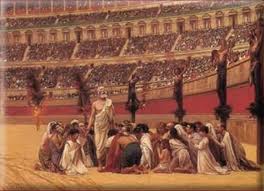
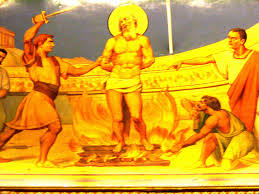
Smyrna was a city that had seen its share of war, destruction, and death, but by the time John wrote his letter to the church located there, Smyrna’s loyalty to Rome had paid off handsomely and it had become a very prosperous city indeed. It boasted a famous stadium, library, and the largest public theater in Asia. Smyrna was rich, but right in the midst of all the wealth Smyrna possessed was a group of believers who suffered intense persecution and poverty. The persecution came from two main sources: Jews and Rome itself.

A large population of Jews occupied Smyrna, and they despised the Christians. The Christians were associated with Judaism yet their claims regarding Jesus threatened to create waves in the community and destabilize civic relations between the Jews and the Roman leaders of Smyrna. It would seem that the Jews of Smyrna enjoyed at least some affluence and influence within the community, and the church in Smyrna was viewed as a threat to both. The Jews went to great lengths to disassociate themselves from the Christians in Smyrna, and hurt them in any way they could manage.

 Then there was Rome itself. At first it was the “spirit of Rome” the Dea Roma that had been worshipped. This Rome that had brought stability, prosperity, and peace (pax Romana ) was easily made an object of worship. But there is a certain degree of ambiguity when dealing with merely the “spirit of Rome.”  So, the Emperor became the personification of this spirit, and voila; Caesar worship was born. Once a year the people had to burn a pinch of incense on the altar, and declare, “Caesar is Lord.” This is the one thing the Christians of Smyrna could not do. And for their disloyalty, they were branded as criminals and regularly faced imprisonment and death.

Despite my simplistic and brief look at the context in which the church in Smyrna found itself, I hope you get an idea of the pressure the they were under. Undoubtedly, as a result of the sufferings endured at the hands of the Jews and Rome, the Christians in Smyrna regularly had their property and belongings seized. They were Smyrna’s “scum of the earth.” What a comfort it must have been for them to hear their Lord Jesus say, “I know your tribulation and your poverty (but you are rich).” Jesus assured them that he knew all about them and their situation. He invited them to view prosperity in a different way. He told them that the poverty and suffering that made them contemptible in the eyes of the people of Smyrna were the very things that made them rich in the eyes of the One who knows all things. Jesus says, “Church in Smyrna, I know everything that is going on, and I want you to see it how I see it.”

 Church of America, Jesus knows all about us. He knows our situation, and he knows our hearts. I’ve got good news and bad news for us who make up the church in America. The good news is Jesus knows. The bad news is Jesus knows. He knows those who are his, whose hearts belong to him. He knows the ones who claim to be His and are not.   He sees when people make fun of you in the work place and universities on account of his name. He sees the tears shed in prayer. He knows every pressure brought to bear against you. He knows you and your situation. He also knows how we here in America have made church into a business. He knows our preoccupation with the things of this world. He sees it when we hate each other, and lie to one another. He knows how we love our doctrines and denominations more than we love him. He sees how we manipulate each other. He knows when we speak out of our own minds and imaginations yet proclaim, “Thus saith the Lord.” He knows that we love the American Dream more than we do him. He sees our self-absorbed demands for justice.

 Church, let us come to the One who knows us inside and out. May God’s Spirit  help us see tribulation and poverty the way He sees it. May his words, “I Know.” be that which both brings us comfort, and leads us to repentance.

Smyrna: I Became Dead but Live!

Of the seven letters written to the churches in the book of Revelation, I think it is the church in Smyrna that we, the American Church, have the least in common with. The irony of it all is that I believe that the letter to Smyrna is precisely the letter we need to hear from most. Soooo, I want to take the letter verse by verse, look at some history that will help us understand how the folks at Smyrna may have received the letter originally, and then hopefully point out some relevant application for us. Let’s do it.

And to the angel of the church in Smyrna write: ‘The words of the first and the last, who died and came to life. I know your tribulation and your poverty (but you are rich) and the slander of those who say that they are Jews and are not, but are a synagogue of Satan. Do not fear what you are about to suffer. Behold, the devil is about to throw some of you into prison, that you may be tested, and for ten days you will have tribulation. Be faithful unto death, and I will give you the crown of life. He who has an ear, let him hear what the Spirit says to the churches. The one who conquers will not be hurt by the second death.’”(Revelation 2:8-11 ESV)

Jesus greeted Smyrna with the words “[The One speaking to you is the] first and the last, who died and came to life.” Those words would have immediately gotten the attention of the people because Smyrna was literally a city that had come back from the dead. Smyrna was a piece of prime real-estate, and although it had been the site of many civil wars, its location made it advantageous to rebuild. Around 580 BC Smyrna had been destroyed by Alyattes, the king of neighboring Lydia, and had lain “dead” for centuries. It was ultimately rebuilt around 290 BC by Lysimachus and Antigonus. So when Jesus says, “I am the One who became dead but lives,” the people were reminded of their own history, but more importantly that the One speaking to them knows first hand what it truly means for life to come through death. He is the first and last, the One who like Smyrna had died and lives. And this One would never die again! And with the suffering, persecution and death the church in Smyrna faced, it was important for them to understand that for the believer, death is not the end. In fact, it is through death that life comes.

I think the Church in America has forgotten that although we do have life in Christ, this life does not come as a result of pursuing “life, liberty, and happiness,” but from embracing the cross. Only as we die to ourselves, pick up our own cross and follow him do we know what it means to truly live. In our ease and prosperity we have forgotten that “whoever would save his life will lose it, but whoever loses his life for my sake will find it.” Our ministers sometimes see and promote themselves with such arrogant flamboyance forgetting that a true servant of the church is one who says, “But we have this treasure in jars of clay, to show that the surpassing power belongs to God and not to us. We are afflicted in every way, but not crushed; perplexed, but not driven to despair; persecuted, but not forsaken; struck down, but not destroyed; always carrying in the body the death of Jesus, so that the life of Jesus may also be manifested in our bodies. For we who live are always being given over to death for Jesus’ sake, so that the life of Jesus also may be manifested in our mortal flesh. So death is at work in us, but life in you.” – Life coming through death! We have become so consumed with preserving our lives and way of life that we scarcely speak of having been crucified with Christ and living only because of Christ who lives in us. I think we here in the West must remember that even as Jesus became a corpse and lives, so we too must participate in his death that we might live.

In the days that lie ahead, the American church may indeed find out what it means to face the tribulation the church in Smyrna endured. I pray that we will heed the words of Him who became dead but lives.

To be continued…

Soggy Bottom Hearts

I don’t know about you, but I have seen the capacity within my own heart for treachery against the Lord, and it is a truly sobering realization. We all know the verse in Jeremiah in which the prophet reminds us that “the human heart is the most deceitful of all things, and desperately wicked,” but when you acknowledge the fact that your heart can be deceitful and wicked, well, it ceases to be just mere words in the pages of a book. I have to confess that the potential for weariness, bitterness, and even rebellion lurks at the soggy bottom of my heart.

I was reading in Ezekiel 20 this morning, and when I read verse 32, I thought to myself of how treachery and turning away from the Lord sometimes begins with the desire we have to simply be like everybody else. Here’s how the verse reads, “[The Lord says,] what is in your mind shall never happen—the thought, ‘Let us be like the nations, like the tribes of the countries, and worship wood and stone.’” God had called Israel to be a people particularly for him. He gave them rules, instructions for worship, Sabbath days, and so on. He did this so that they might know him. (Check out how many times Ezekiel 20 contains the phrase, “…that they might know.”) But they grew weary, and rebelled against the Lord. They began to look upon his ways as being grievous and burdensome. They looked  at the people around them and were seduced by what they saw. Their heart went after the gods of the nations around them, and in spite of the Lord’s affection for them, they dealt treacherously towards him, and said, “We just want to be like everybody else!”

Really, I don’t think much has changed. Even today, we who call upon the name of the Lord often look around at the things we see in the world, and begin to be seduced by what we see. Our culture, movies, and TV present a life without God as being so carefree and wonderful. It’s all so silky smooth and seductive. The Christian sometimes begins to see his walk with Jesus as grievous and burdensome. We begin to be like the Psalmist who complained, “I envied the proud when I saw them prosper despite their wickedness.They seem to live such painless lives; their bodies are so healthy and strong. They don’t have troubles like other people; they’re not plagued with problems like everyone else…Look at these wicked people— enjoying a life of ease while their riches multiply. Did I keep my heart pure for nothing? Did I keep myself innocent for no reason? I get nothing but trouble all day long…” (Ps.73) If we’re not careful, we can come to the place where we say, “You know what, I just want to be like everybodytheprisoner_heart-of-the-swamp else. God’s ways are just too much.” Have you been there? Are you there now?

I think the answer may at least in part lie in the way we think about God. For so many, walking with Jesus is just a religious ritual consisting of a gigantic list of “DO’s” and DONT’s.” Remember how I said that in Ezekiel 20, the Lord repeatedly says, “That they might know.”? Well, knowing God is more than keeping a bunch of rules. While we do live holy lives and seek to please God in all that we do, the holiness and the doing are to flow out of our intimate knowing. God doesn’t simply want us to mechanically serve him, adhering to some dead religious code of ethics, but rather desires that we be captivated by Jesus, and serve him from a heart filled with the love and knowledge of God. Remember Jesus tells us, “And this is eternal life, that they know you the only true God, and Jesus Christ whom you have sent.”

Yep, we all have soggy bottom hearts. There’s all kind of stuff down in there. But before you throw in the proverbial towel, and think that it would be so much easier to just be like everybody else, remember that God wants you to know him! His ways are not heavy and burdensome, but designed to bring you into deeper love with him. Delight yourself in the Lord!!

Look Out Man

“Son of man, I have made you a watchman for the people of Israel…”

More often than not, when you listen to so-called prophets today, their message is one of blessing, victory, the thrill of being God’s anointed, and instructions as to how you too can receive the awesome mantle that God wants to give you. One thing you don’t hear too much about is sharing in the “suffering of God,” and the suffering of others.

It is truly amazing when you look at the life and ministry of the prophet Ezekiel. Here is a man that did not escape the difficulties resulting from  the judgment of God upon his rebellious people. Ezekiel endured exile and ministered to his people as a fellow captive. This was not a man who sat in his house receiving lofty messages from God, and then pontificating the word of the Lord to his audience by some ostentatious means. No, this was a man who lived among his people as one of the people. His prophetic calling did not afford him the reputation of being some super-spiritual mega saint, no; God required him to offer his very life as an example of what was about to befall the nation. Read the first four chapters of Ezekiel, and you’ll see just how God demanded of his messenger wild and even humiliating behavior. Are we willing to allow God to use our lives in what ever way he sees fit in order to reach those around us?

God shared with Ezekiel the brokenness that he (God) experienced over the people’s “whoring heart that has departed from me and over their eyes that go whoring after their idols.” (Ezek. 6:9)  How many of us today move close enough to the heart of God that we weep and mourn over the condition of his people? We desire God’s blessing and anointing, but reject the fellowship of his sufferings. Today, we are more concerned with our rights, how things are affecting our lives, but spend little time at Jesus’ feet so that we might see and share in God’s heart. We put more effort into making sure we can keep our guns and have a right to privacy, than we do in endeavoring to “understand” how God’s Spirit is being grieved. Let us repent of our preoccupation with ourselves, and turn our hearts towards God that we might become preoccupied with him and his desires.

True servants of God rarely resemble the flamboyant superstars prevalent in our churches today, but like Ezekiel, are those who share in the suffering of the people, being burdened by that which touches the heart of God, and offer their very lives as a living gospel.

Looking, Loving and Speaking

“And Jesus, looking at him, loved him, and said to him…” (Mark 10:21)

How often do we really look at people? In our “I have 5,450 friends on Face Book” culture, it is so easy to not look at each other. Oh, we’re quick (especially us preachers) to tell people how they should live, what they should and should not do, where they should and should not go, etc…; but do we take the time to truly look at the folks we’re talking to? In reading Mark 10, I was struck by the way Mark described Jesus’ reaction to the “rich young ruler.

The young man had come to Jesus, curious as to how one goes about gaining eternal life. The conversation was not too intense at first. Jesus tells him, “You know the commandments.” The young man replies, “I’ve kept those all of my life.” And then, instead of immediately launching into “You need to do this” or “You need to do that,” Mark tells us that Jesus looked at him. So often, we spout off spiritual prescriptions to people without taking the time to ask God to help us see them as He does. We have become a society of people who prefer surface level relationships, and very rarely take the time to go deeper. We spend hours looking into the computer screen, but have a hard time looking into each other’s eyes. Check out the progression in the verse above: Jesus looked, and then he loved.

How can we love people we don’t look at? I believe if we would slow down, pray for wisdom and discernment, and ask God to help us see people by his Spirit; we would be able to truly love them. Jesus looked at the young man in our verse, and he loved him! True spiritual insight will move us to respond from a heart of genuine love and concern, instead of a desire to hear the sound of our own voices. Like Jesus, if we would but look, and let God fill our hearts with love for those to whom we would minister, we would then be ready to meet the real need in their lives. Only those who look and love can discern what it is that a person needs to hear. Remember, Jesus looked, loved, and then spoke.

Sadly, I must confess that there have been times when I loved the sound of my own voice more than the person to whom I was speaking. I just couldn’t wait to offer my “two cents worth,” and probably what I said did more harm than good. Jesus, motivated by love for the young man in our verse, clearly saw the area of need in his life, and addressed it with laser precision. People don’t need flippant, trite, prepackaged responses; they need our attention and love. Jesus was able to be brutally honest with our young man because he loved him. He saw the man’s heart, which revealed the man’s need, and then, with love and clarity, provided the answer to his initial question.

If we really want to connect with people and truly minister to them, I think perhaps we should remember: look, love, and then speak.

The Realio

Quite often, when my daughters and I phone each other and leave a voice mail, the message we leave is only three words, “You don’t see.” For us, this has come to be an inside joke whereby we are telling each other, “You don’t see what’s really going on.” or “You don’t understand how cool I am.” Basically though, it simply means that you are failing to comprehend the “realio.” You just aint gettin’ it! I think that’s what Jesus was saying to the disciples in Mark 8 when he said, “Don’t you know or understand even yet? Are your hearts too hard to take it in? You have eyes—can’t you see? You have ears—can’t you hear…Don’t you understand yet?” (Mark 8:17-21)

It’s sobering to realize that Jesus was speaking to a group that earlier he had referred to as insiders who had been given the secret of the Kingdom of God. Now, these insiders are acting like outsiders that don’t yet truly understand who Jesus is at all. They had seen miracles. They had seen him calm the storm. They had seen him cast out demons, but still did not grasp the fact that the guy they were dealing with was the promised Messiah, the Son of God. These guys had intimate, regular interaction with Jesus, and yet were slow to comprehend who he is. Are we any different? We go to church, sing the songs, hear the sermons, and even (God forbid) have emotional outbursts. But who do we say that he is? Do we love and worship Jesus because he is God or simply for what he can do for us, or because he makes us feel good about ourselves? If Jesus is God, then how can I respond to him as if he is simply a hobby? Do we who call ourselves Christians, who are to be the light of the world really know who Jesus is?

The religious leaders of the day thought they knew how Messiah would be, how he would act and what he would do. King Herod thought Jesus was John the Baptist, back from the dead to haunt him. Some said Jesus was Elijah or some Old Testament prophet. Even those closest to him had trouble fitting Jesus into their preconceived concept of Messiah. And we who make up the church today are guilty of trying to make Jesus fit into our boxes as well. We are very much like the blind man at Bethsaida who, after coming in contact with Jesus, said, “I see people, but I can’t see them very clearly. They look like trees walking around.”(Mark 8:22-26)  He needed Jesus to touch him again in order for his sight to be fully restored. Perhaps we too need a “fresh touch” so that we can see more clearly. The problem is that we think we know everything. We think that our little group is the only one that really sees.

At the end of Mark 8 we see (no pun intended) Peter finally comprehending and confessing that Jesus is the Christ, but he still suffers from blurred vision. Jesus tells the disciples that he must go to Jerusalem where he will be rejected, killed and after three days rise again. “As he talked about this openly with his disciples, Peter took him aside and began to reprimand him for saying such things.” Peter still didn’t quite get it. He had his ideas about how it should all play out, but Jesus would have none of it. Further clarity was needed. There was no easy path for the Lord to take; he must lay down his life. And what’s more, so must we. Jesus wanted the disciples (and us) to first see who he really is, and then they must be made to understand that to follow him, they too would be required to lay down their lives. “If anyone would come after me, let him deny himself and take up his cross and follow me. For whoever would save his life will lose it, but whoever loses his life for my sake and the gospel’s will save it.”(Mark 8:34, 35)

The realio is that Jesus is God, and as God deserves my all. I don’t know everything, and need continued fellowship with Jesus as well as the body of Christ to ensure that I am seeing properly. One of the ways I can be sure that my vision is okay is when what I’m seeing moves me to deny myself and give all I am to the One who denied himself and gave all he is for me. Do you see?

Trees, Roots and Barred Owls

There’s a park in Davidson, NC called Fisher Farms that’s very close to my house. I go there quite often to run and walk the trails. It’s pretty cool, I’m even friends with a Barred Owl that lives there in the woods. Mind you, I’m his friend. I don’t think he’s mine yet, but I’m working on it. Anyway, I haven’t got to that point that I’ve heard runners allude to as to how running is a “spiritual thing” for them, but I did have some thoughts out there in the woods, and figured I’d pass them along.

One of the first things I noticed as I began to frequent the trails was all of the exposed roots from the various trees that literally carpet the ground. There are so many trees and so many roots that you can’t tell which roots belong to which trees. Obviously, the trees are distinct, but the roots twist and turn and overlap in such a way that makes it impossible (at least for me) to assign a tree to the roots. I started thinking that that is kind of how it is (or should be) for us Christians.

We are each ” planted” in Christ, our “roots” are all drinking from the same source. And as we spread out, growing in Jesus, there should be a “blending,” a unity in the Spirit  as our common thirst, the need we each have to drink of Him  produces an “overlapping root system.”  As we grow in Christ together, our roots mingle, and we began to look alike- conformed to the image of Jesus.

One last thought about trees and roots and Barred Owls. Occasionally, while running through the woods, I’ll trip over one of the roots. In fact, my right “ring-finger” has never been the same because of one of those falls. But it got me thinking how we Christians can stumble over one another, and even hurt each other. Now don’t get me wrong, I do know that there are such things as “stumbling blocks,” but I think more often than not we trip over each other simply because we’ve taken our eyes off the trail, and have gotten distracted by other things. Something I’ve learned is that while I am quick to blame others for my missteps, usually the problem originates with me. I take my eyes off of Jesus and boom!! A Barred Owl goes flying by and a root “reaches up and grabs me.”

It takes more than one tree to make a forest and more than one Christian to make up the body of Christ. May our roots go deep into him, each of us taking on his likeness, reflecting his glory in congruent diversity. And oh yeah, don’t let the Barred Owl distract you!!

 “Blessed is the man who trusts in the LORD, whose trust is the LORD. He is like a tree planted by water, that sends out its roots by the stream, and does not fear when heat comes, for its leaves remain green, and is not anxious in the year of drought, for it does not cease to bear fruit.” (Jeremiah 17:7, 8 ESV)

Acoustics

Test. Test one, two. Test, test one. Test, one, two. Can you hear me? How ‘bout now?  How’s your hearing, your spiritual hearing that is? It’s not just a matter of if you can hear or not, but it’s how you hear as well. Check this out:  “And he said to them, ‘Pay attention to what you hear: with the measure you use, it will be measured to you, and still more will be added to you. For to the one who has, more will be given, and from the one who has not, even what he has will be taken away.’” (Mark 4:24, 25 ESV)  So often when we hear Mark 4 preached or taught, it centers on the four types of soil and the preacher asks, “Now what kind of soil are you?” I do believe that’s a valid teaching, but I think there’s a little more to it than that. I think part of what Jesus is saying to his disciples is an exhortation to effective hearing. How’s this for a cool catch phrase? Jesus is teaching us to: “Develop Kingdom Ears.”

If you read Mark 4 in its entirety, you find that Jesus refers to his disciples as “insiders” who have been given the mystery of the kingdom of God. Jesus had just spent the day teaching the crowd with parables, but now, alone with his followers; he is speaking plainly. Because of our proximity to Jesus, we are able to hear him speak regularly. By his Word, by the Spirit, through our brothers and sisters, we are hearing God (or should be) speak to us. But the question is how we are hearing. What “measure” are we using? The context of Mark 4 gives us a couple of indicators we can use to help figure out if our hearing is okay.

First, someone that’s hearing properly will be a light to those around him. “Is a lamp brought in to be put under a basket, or under a bed, and not on a stand? For nothing is hidden except to be made manifest; nor is anything secret except to come to light.” (Mark 4:21, 22 ESV) A person with Kingdom Ears (I kind of like that) isn’t just sitting at home thinking deep spiritual thoughts, but is regularly sharing with others what he has heard from the Lord. You are the light of the world, and if you are really hearing from God, you will be shining, bringing revelation into those around you.

Second, the effective listener lives the lifestyle of a “seed planter.” It just comes natural. “And he said, ‘The kingdom of God is as if a man should scatter seed on the ground. He sleeps and rises night and day, and the seed sprouts and grows; he knows not how. The earth produces by itself, first the blade, then the ear, then the full grain in the ear. But when the grain is ripe, at once he puts in the sickle, because the harvest has come.’”(Mark 4:26-29 ESV) Like Jesus who sat in a boat that day and threw “seed” out on all kind of soil, the disciple with Kingdom Ears will be one who, as a natural way of life, scatters seed all over the place, leaving the outcome to God.

Jesus promises that if we will pay close attention to what we hear, if we will shine and scatter seed as a way of life, we will receive more. More understanding, closer intimacy, more seed, and more light! However, if we are only casually listening, we may actually not be hearing at all, and are at risk of losing what we thought we had to begin with. In light of what we’ve talked about today, I’ll ask you again, “How’s your hearing?”

Immanent Love: When God Assumed

One of the things that had the greatest impact on me during my time in seminary is not some great theological truth gleaned from one of the countless books we had to read, but rather part of a prayer one of my professors (Dr.G!!) prayed at the beginning of class one evening. He was praying along and then he said, “And Father, I thank you that you decided that you didn’t want to be God without us.” BOMBSHELL!! I had never heard someone say anything like that before. Honestly, I was a little taken back. There was a part of me that thought that perhaps he shouldn’t have said that. For some reason that part of his prayer kind of offended me a little.  It seemed wrong somehow. Now, looking back, I can see that it was merely my Western religious paradigm that had been shaken to its core by a simple prayer.

 We good, Protestant Christians of the West speak of God’s love, but many of us (if we are honest) see God as some kind of egotistical tyrant  who can barely stand the thought of us and puts up with us only because we forced him to send Jesus to pay for our sins. Our understanding of God centers on the wrath of God and sin. Our God is a God far removed from his creation (transcendence), and the thought of his actually wanting to be near us (immanence) offends us somehow. We are taught that even after we come to Christ, we are still filthy, rotten to the core. And really if you get right down to it, the part about God being your Father is just theological mumbo jumbo – you best just be concerned with being good!! If the truth were told, it is fear and not love that binds many of us to God.

Now don’t get me wrong, I’m not minimizing our sin problem. We’ve all got one, and it brings about death, separation from God. But that’s precisely the point. Because God loves us so much, the Father sent the Son to redeem us and make it possible for us to partake in the eternal life that is in God. We brought sin and death into the world, our loving God provided the way back to Life and fellowship through the life, death and resurrection of Jesus. God does not hate you, but loves you and desires to reveal himself to you. You were created for him. The Triune God who is eternally holy, existing as Father, Son, and Holy Spirit, perfect and in need of nothing, because of love desired to have a people who would be indwelt by his Spirit and conformed into the image of the Son. He may have not needed us, but hallelujah; he wanted us!! He wanted  you!!

Our theology has evolved into an extremely lopsided thing. We’ve stressed the transcendence of God and our own sinfulness at the expense of the immanence of God and his love. We emphasize the judiciary aspects of salvation and have lost sight of the fact that the One we fear as judge is the same One who created and desires us. My friend, the cross is not the image of a horrible God that demands blood in order to satisfy his insatiable wrath, but rather a demonstration of a God who assumed the brokenness of his creation in order to satisfy his  insatiable love.