Of Mice, Men, Peppermint Oil and Malls

I don’t do the “mall thing” very often. I can count on one hand the times I’ve been to a mall in the past couple of years. However, today I found myself having need of some peppermint oil, and I figured the mall would be the surest place to find some. I live out in the country, and from time to time a mouse will find his way into my home. According to my internet research, peppermint oil strategically placed in the house can serve to deter “unwelcome visitors.” So, it was off to the mall.

 Once at the mall, I simply couldn’t resist a trip to the food court. I completely justified my actions with, “Well, I’ve been doing good for nine months, I’m at the mall, what harm can a sandwich and some fries really do at this point? I’ll run it off tomorrow…blah, blah, blah.” Anyhow, as I sat at the table surrounded by hundreds of others, I felt my eyes began to burn and tears welled up. Children were riding the carousel, music and videos blared out of TVs hung high up on the walls, and the whole atmosphere was kind of like a carnival. I thought how strange I must look, sitting there eating, crying, and looking around like some kind of weirdo who just discovered that there was such a thing as malls. But I couldn’t stop.

I decided to walk a bit, and as I did; I passed a man sitting on one of the benches. He reminded me of a figure out of the old west, weathered and square-jawed. There seemed to be an inner strength within him, but what really struck me was the sadness in his eyes. We made eye contact, I gave the cordial head-nod, but he would barely look at me. I wondered what made him so sad, and felt as if I should stop and say something, but I didn’t. As families walked by laughing, and lovers lazily strolled, holding hands, oblivious to everyone else; I considered the sad “cowboy,” and my heart broke within me.

As we occupy ourselves with playing church and going about the business of religion, we have become no better than shopping malls. We do what we can to attract the people into our little “shop.” We do the coolest worship songs, have the hippest preachers, and know all the latest religious catch-phrases. And hey, if you don’t find what you need in here; there’s another shop just around the corner that may have what you’re looking for. Sadly, while we’re trying to be relevant and hold onto our little corner of the “church mall,” people are sitting right outside our doors, broken-hearted, without hope, and in need of Jesus.

Today, thinking of mice and men, peppermint oil and malls, my prayer is that we who call ourselves Christians will be done with our shopping mall mentality, come out of the carnival we call church and take Jesus to the world around us.

Love Song (Singing The Song of Solomon)

“I slept, but my heart was awake, I heard my lover knocking and calling: ‘Open to me, my treasure, my darling, my dove, my perfect one. My head is drenched with dew, my hair with the dampness of the night.’ But I responded, ‘I have taken off my robe. Should I get dressed again? I have washed my feet. Should I get them soiled?’” (Song of Solomon 5:1-3)

Reading this, I couldn’t help but think of how often I respond to Jesus as Solomon’s bride did to him. How many times have I sensed the wooing of God’s Spirit, “Come, seek My face. Come and be with Me.” and failed to yield to his loving call. We can be so easily distracted by things, even good things, that we fail to remember that the most important thing of all is, “My beloved is mine, and I am his.”

How much we forfeit by busying ourselves with the lesser things, forgetting to choose the better part that is only found at the feet of Him whose “love is better than wine.” Who can compare to the Lord? Who else can but speak our names and the very love of God floods our hearts as His Spirit brings grace and mercy, restoring our strength with a mere whisper? “The voice of my beloved! Behold, he comes…” I will wait for the Lord, for He will gladly sustain me with His word, words sweeter than honey, piercing my very soul. “Let me see your face, let me hear your voice, for your voice is sweet, and your face is lovely.”

Because Your loving-kindness is better than life, my lips will praise You and I will bless you, lifting up my hands in Your name! I will sing to you O God for you are everything to me. “I am my beloved’s, and his desire is for me.” How can it be that You my Lord would love such a one as me? “Set me as a seal upon your heart, as a seal upon your arm…”

“I will seek him whom my soul loves. Draw me after you and let us run together! The king has brought me into his chambers.”

“The Bible” History Channel Style

“You search the Scriptures because you think they give you eternal life. But the Scriptures point to me! Yet you refuse to come to me to receive this life.” John 5:39,40)

Tonight marks the airing of the first episode of the History Channel’s “The Bible,” and it seems as if a lot of folks are awfully excited about it. Me, I don’t know. I’m not in the loop as they say, and while “faith celebrities” like Warren and Osteen were privy to a sneak preview, like you; I’ll have to watch it like normal folks. As I have not seen the series, it would be foolish and presumptuous for me to comment on it; however, I will venture some preliminary thoughts.

I do frequently watch the History Channel, that is, when they actually air something reputed to be of historical relevance and not the so called “reality- TV” they seem to be promoting these days ( by the way, “The Bible” is produced by the reality-TV heavyweight Mark Burnett and his wife, the actress Roma Downey). On a number of occasions, when the History Channel has televised programs which utilize the Bible, I have observed gross mishandling of the scriptural texts. So, I suggest that if you watch this mini-series,  check out your Bible as to accuracy. The problem is, we live in a biblically illiterate culture. Many (even Christians) will accept the History Channel’s version of the Bible as “reality,” without having read the Bible themselves.

Most importantly, when the series moves into the New Testament, be discerning as to the way in which Jesus is portrayed. Watch to see if the History Channel’s Jesus is depicted as God. The Bible says that although Jesus is indeed fully man, he is also God the Son, the logos who is life itself. The Bible teaches that no one can “understand” God, come to him, or have any relationship with him, accept through Jesus. Jesus himself said in the book of John, “All who hear from the Father come to me.” I think the most important thing to watch for in this mini-series will be the way in which Jesus is depicted.

Regardless, of how it turns out, at least the series may prove to be a means by which the believer can enter into conversation with others about the Bible, in particular the Jesus of the Bible. So, if you watch “The Bible,” watch it with your Bible in your lap, be discerning as to how Jesus is portrayed, and be prepared to discuss it with those God brings across your path.

The Presidential Inaugural Prayer Breakfast 1/21/2013 Guest Speaker Jonathan Cahn

I realize I’m probably a day late and a dollar short because most of you have probably seen this video; however, I wanted to pass it along in case some of you have missed it.

Jonathan Cahn delivers what I truly believe is a “word from the Lord” at the 2013 Inaugural Prayer Breakfast. There is no political bias represented in this video; both the left and the right will probably be equally offended. I pray you will watch and listen with all spiritual discernment.

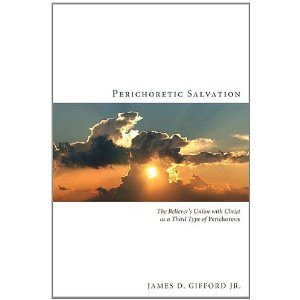
Perichoretic Salvation (Dr. James D. Gifford)

I want to tell you about a book that I really believe can change your life. I had the privilege of having Dr. James D. Gifford as a professor, and he has written a book entitled,  Perichoretic Salvation: The Believer’s Union with Christ as a Third Type of  Perichoresis, which I think is simply awesome.  I took the  pericope below off of the back cover and I hope it will entice you to click on the provided link, and get your own copy. Perichoretic Salvation by James d. GiffordI know the man, and I absolutely encourage you to get his book!

“For two thousand years, Christian theologians have struggled to explain the believer’s union with Christ. What sort of union is this? How can it fully be described? This book is an attempt to join the conversation to explore exactly what it means to be in union with Christ. This book will argue that the believer’s union with Christ can be rightly presented as a third type of perichoresis. Perichoresis is a word that describes the way the persons of the Trinity interrelate, without losing their essential oneness nor without being absorbed into each other. In short, the doctrine of perichoresis preserves the unity and diversity within the Godhead. It is also used to describe the hypostatic union of the divine and human nature in Christ. In Perichoretic Salvation, James Gifford argues that the union of the believer and Christ is a relationship of the same kind, though of a third type. Arguing from a perspective that is rooted biblically, historically, and theologically, the book will allow the union to be explained more fully than in the past while remaining within the bounds of what the church has taught over the centuries. It mat prove to be a basis for understanding the work of Christ afresh for the twenty-first century.”

http://www.amazon.com/Perichoretic-Salvation-Believers-Christ-Perichoresis/dp/1610971140

Bethlehem: The House of Bread

[Jesus was saying to them] “Anyone who eats the bread from heaven, however, will never die. I am the living bread that came down from heaven. Anyone who eats this bread will live forever; and this bread, which I will offer so the world may live, is my flesh.” (John 6: 50,51 NLT)

When you read John 6, you definitely don’t see a picture of Jesus trying to win followers with an “ear tickling” message. In fact, we find that as a result of some of the things he said to the people that day; many stopped following him. He began to speak of “eating his flesh,” and “drinking his blood,” and it freaked a lot of folks out. But really, God had provided hints of all of this that first Christmas night when Jesus was born.

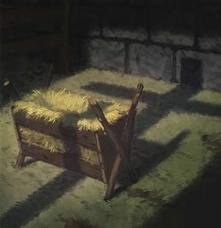
The Bible tells us that Jesus was born in Bethlehem. And do you know what the word Bethlehem means? It means “house of bread.” Let’s go a bit further. We are told that on the night of Jesus’ birth he was laid in a manger. And a manger is where the animal’s food was placed. I don’t think this is a coincidence. I believe that God was giving some clues in how and where Jesus was born. The child that lay in the manger that night in Bethlehem is the “food” God has provided for man to eat resulting in eternal life.

See, that’s the point of Christmas, God the Son becoming man and giving himself for us.

In John 6, the people reminded Jesus that Moses had given them manna to eat when they had come out of Egypt and wondered through the desert. The Jews that heard Jesus speak that day in John 6 were an oppressed people, suffering under the hands of the Roman Empire, and they were trying to manipulate Jesus into giving them bread under the pretense of “just wanting to believe.” Jesus told them that though their fathers had eaten the manna, they had nevertheless died. He corrected them by saying, “I tell you the truth, Moses didn’t give you bread from heaven. My Father did. And now he offers you the true bread from heaven. The true bread of God is the [O]ne who comes down from heaven and gives life to the world.” He continued with, ““I am the bread of life. Whoever comes to me will never be hungry again…”

Listen, if all Jesus is, if all Christmas is to you is the little baby born in Bethlehem that night long ago, you have missed it. The Son became flesh so that you might participate (“eat my flesh” and “drink my blood”) in the very life of God. He was born in Bethlehem, the “house of bread,” and placed in a manger from which the animals ate their food, and he now invites you to come and partake of him so that you may live.


“Away in the Manger”: The Divine Assumption

The Lord only knows how many times “Away in the Manger” will be sung this holiday season. I guess millions will sing about how the “little Lord Jesus lay down his sweet head,” but I wonder how many of us actually give serious thought as to what this really means. We’re all familiar with the old saying about what happens to the man who makes assumptions, but that’s exactly what Jesus did at his incarnation. He assumed it all! But what does it really mean that the Creator of all things would come and assume every bit of what it means to be human, walk among us, and offer himself upon the cross as a sacrifice for our sins? Do we truly understand what was going on and who it was that lay “asleep on the hay”?

First, we must understand that this baby in the manger was God- God the Son. It was neither the Father nor the Spirit that assumed humanity, but the Son. John tells us in his gospel that “The Word [Jesus] was with God, and the Word was God. He existed in the beginning with God. God created everything through him, and nothing was created except through him. The Word gave life to everything that was created,…” In his first letter John further explains that “the one who existed from the beginning, whom we have heard and seen. We saw him with our own eyes and touched him with our own hands. He is the Word of life. This one who is life itself was revealed to us, and we have seen him.” That night at the manger, the Creator had come to his creation. We must understand that Jesus was fully God, in and of himself. He was not adopted as God’s Son because of the good life he lived, nor was it at his baptism that he was then indwelt by the Holy Spirit and equipped to be Messiah. No, the child in the manger was the second person of the Trinity, God almighty in and of himself.

This One who lay in the manger was also fully man. He did not merely appear to be man, pretending to be human while his divinity somehow “absorbed” his humanity. No, this baby was a real human being. An early Church Father, Gregory of Nazianzus, drove home the importance of the fact that Jesus was a real man when he said, “That which has not been assumed cannot be redeemed.” Jesus became every bit human so that he might redeem every bit of us. Any part of him that was not man is a part of us that was not redeemed. Though the child in the manger was indeed God, at the same time; he was indeed the Son of Man. The writer to the Hebrews tells us, “Because God’s children are human beings—made of flesh and blood—the Son also became flesh and blood. For only as a human being could he die, and only by dying could he break the power of the devil, who had the power of death. Only in this way could he set free all who have lived their lives as slaves to the fear of dying.” (Hebrews 2:14,15 NLT)

When we sing of the baby in the manger we must realize that this child is God who assumed every bit of what we are so that he might share “every bit” of who he is with us. The fact that the Son became man makes it possible for we who are men to partake of the divine nature and participate in the very life God possesses within himself, for the One who slept in the manger that night is life itself. And because he is Life, he could be the perfect sacrifice and give his life in atonement for our sins, and be the way for us to once more commune with the living God. John of Damascus said, “For since [Christ] bestowed on us his own image and his own spirit and we did not keep them safe, he took himself a share in our poor and weak nature, in order that he might cleanse us and make us incorruptible, and establish us once more as partakers of his divinity.”

I pray that this year when you hear or sing “Away in the Manger,” you will be more cognizant than ever that the One of whom you sing is the God who assumed our humanity and invites us to share in his eternal life.

Newtown: What in the Dickens?

“Somehow he gets thoughtful sitting by himself so much, and thinks the strangest things you ever heard. He told me, coming home, that he hoped the people saw him in the church, because he was a cripple, and it might be pleasant to them to remember upon Christmas Day, who made lame beggars walk, and blind men see.” (From A Christmas Carol by Charles Dickens)

As I have contemplated the shootings in Newtown, watched the coverage provided by the news media, listened to speeches, and read various social media posts; I have been saddened by the immediate political jockeying that has taken place on both sides of the isle and especially by so called Christian political activists. It seems that there is no shame and folks have the ability of taking a horrific event such as the one that recently occurred in Newtown, and making it all about them and their agenda. Christian, we should expect nothing less from the world, but we who are in Christ have so much more to consider.

While it is natural, during times such as this, to have questions regarding Theodicy (why there is evil in the world), as I prayed for the people of Newtown; I began to realize what the people of Newtown need most of all right now is Jesus. Theologians and philosophers have long grappled with the problem of evil, and there are various schools of thought regarding this issue. I dare say the debate will continue ‘til kingdom come, but there is one thing I do know for sure. God can bring good out of even the most difficult circumstances. And he will accomplish this through Jesus.

In the pericope above from Charles Dickens’ A Christmas Carol, Mrs. Cratchitt had asked her husband how their crippled Tiny Tim had behaved at church, to which he replied, “As good as gold, and better. Somehow he gets thoughtful sitting by himself so much, and thinks the strangest things you ever heard. He told me, coming home, that he hoped the people saw him in the church, because he was a cripple, and it might be pleasant to them to remember upon Christmas Day, who made lame beggars walk, and blind men see.” As I read this, I began to think that the disposition of Tiny Tim, a child who suffered greatly, should be our own. “God, somehow, through all of this suffering, let people be moved to think about You.”

Christian, as we struggle to comprehend what has happened in Newtown, let us resist the temptation to use it as a platform for our own personal political ideologies, and pray instead that in the midst of such senseless brutality and suffering, that the One who offered his life willingly upon a cross, enduring the most heinous example of human depravity may be brought to bear in the hearts and minds of the families of Newtown. Let us pray that God’s Spirit will show the community of Newtown the reality of the One who said, “ I AM the resurrection and the life, he who believes in me, though he die, yet shall he live, and everyone who lives and believes in me shall never die.”

Friends, where sin abounds, God’s grace abounds all the more. True comfort, true healing, true restoration is to be found in Jesus and it is He who can minister to the brokenhearted people of Newtown and the nation.

OZmosis

Walking down the old “Roman Road” just wont do for those who have taken the yellow-brick road to Oz, and now reside somewhere over the rainbow.

In an ever undulating culture, only the Wind of the Spirit can communicate the steadfast reality of life in the Son.

Reciting a list of God’s attributes does little for those who, having seen through the sterilized facade of our dead religion, attribute to us no relevance at all.

Is it because we do not truly know Him ourselves that we doom a generation to invent heresies which provide them with the communion and intimacy they so desperately seek?  It’s so hard to tell them about Someone we don’t really know.

Have the “Cross” and the “Blood” become mere nails we use to secure our institutions against the intruding winds of change? It’s the Cross and the Blood which are to reveal the very love and life of God, not provide a manual by which we construct impenetrable religious strongholds where we hide safe from the chaos of the world.

Aunty Em is standing on the front porch pleading for Dorothy to come back home, but Dorothy Gale has been mystified by Professor Marvel and his crystal ball.

In a world inundated with parlor tricks, only the Power of the Spirit can demonstrate the reality of an almighty God.

Repeating the sinner’s prayer does little for those who, having seen through the hypocritical veil with which we cover our own sin, pray that we simply go away.

Is it the preoccupation we have with the lust of our own flesh that will doom this generation to a hell which we ourselves will barely escape? It’s so hard to tell the world about the beauty of holiness when we’re no different than they are.

Have “Sanctification” and “Righteousness” become nothing more than pharisaical labels used to keep out those “undesirables”? It’s the Church clothed in garments of white that is to invite an on looking world to glorify God, not push them away as if we’re afraid they might get us dirty.

“Better get under cover, Sylvester. There’s a storm blowin’ up – a whopper, to speak in the vernacular of the peasantry. Poor little kid, I hope she gets home all right.”