Desire

Christian,

After you have confused Christianity with Patriotism  …

After you have forsaken preaching the gospel of Jesus for becoming a minister of the American Dream…

After you have partnered with the world and made unholy alliances which divide you from others in the Body of Christ…

After you have argued, manipulated, and fought to secure your precious rights…

After you have voted…

When it turns out just as you hoped it would and you get everything you want, will you be able to bear it when you see with your eyes what you have truly desired in your heart?

“Delight yourself in the Lord,
and he will give you the desires of your heart.”

Lifehouse “Everything”

I remember years ago seeing this video and how it resonated within me. Jesus is EVERYTHING! I pray, as you watch this video, that Holy Spirit will encourage your heart in the Lord and remind you once more that Jesus is everything you need.

http://www.youtube.com/watch?v=cyheJ480LYA

Asleep in Babylon

Asleep in Babylon, they dream.  As the words of the Apostles and Prophets come alive around them, they dream on.

They are oblivious to the beginnings of the stirring of the beast, and the cry of, “Come out of her my people, and do not partake of her sins.” is but an echo of His voice meant for some generation long ago.

The days of the Spirit have ceased, and God no longer speaks. All that remains is to sleep, and wait for the gospel to permeate the world. It’s easy to ignore the writing on the wall when you’re convinced you know everything.

“Take the book and open the seals.”

Asleep in Babylon, they dream. Conferences and impartations, trivial pursuit is such a deadly game. They dream on.

Who is gonna reform the Reformers? Tired arguments, stale rhetoric, and doctrinal clichés doom the next generation to invent heresies. They know something is missing, but to admit what It is would blow their theology. Lullabies are plentiful in Babylon.

Institutionalized, mesmerized, idealized- It’s over guys! Yet, it’s business as usual, sleepwalking on the deck of the Titanic. There has to be some way to save all that we have built.

“Behold, I stand at the door and knock.”

Asleep in Babylon, they dream. If you ignore the riders on their horses maybe they’ll just go away. They dream on.

Wholesale slaughter, a loaf of bread for a days wage, deception, war, and pestilence abound. You better not touch my Chick fil a. The world is on fire. I wonder if they have an app for that.

IPhones, ringtones, a trumpet blast, and we’ll all be gone, ‘cause you know God wouldn’t let his people suffer. Hey, our worship team just got a smoke machine. That’ll go great with the angel feathers and the glory cloud!

“I find your deeds incomplete in the sight of my God.”

Asleep in Babylon, they dream. I heard Jesus came back Saturday night. Never mind that; services start tomorrow at eleven.

Looking In the Mirror

In prayer, I began to think about some of the people in my life. There are those who are mere acquaintances, others who I know rather well, and still others who I would consider to be intimate friends. (While I most definitely haven’t retreated into some kind of monastic solitude and ceased to interact with those outside of Christ, I should point out that I am talking about brothers and sisters in the Lord). Anyhow, I was thinking about how my closest friends love the Lord and seek him just as I do, yet; we have such different thoughts concerning life and ministry. I began to ask the Lord to help me understand theses things. Honestly, I must say as of now I haven’t received any great “revelations,” but He did show me some things – about me.

Isn’t it strange that when you go to the Lord with your complaints about “every body else,” he is usually more interested in talking about you? The Spirit brought to my mind that passage in James 4 that asks, “What is causing the quarrels and fights among you? Don’t they come from the evil desires at war within you?” I immediately began to ask God to expose my motives. I started thinking that maybe some of the difficulty I was having with my thoughts about others was due to my own selfish desires. I wondered if perhaps my expectations of others had become centered on my desires instead of the will of God. I thought of how strange it is that in the midst of our pursuing Jesus, we are still able to hurt each other; if not outright, in the secret place of our hearts. Something just didn’t seem right about that. I began to suspect that perhaps even my supposed selflessness was selfish, and that my love for others was shallow and disingenuous.

As I waited before the Lord, I began to ask him if I had come to cherish the act of ministry more than the people to whom I minister. Am I truly seeking to build up and equip the body of Christ, or am I in love with preaching, teaching, and singing? Am I holding on to my position out of fear that if I let go, I wont be able to “minister” as I have I have become accustomed to doing? Has my service to God become about me? Perhaps the conflict regarding ministry I sometimes sense with others is merely a result of my own selfish desires.

Pondering these things in his presence, I began to cry out for God to heal me. I thought of David’s prayer to God for a clean heart and a right spirit. I was reminded that it is the willing spirit that the joy of fellowship with God produces that yields fruitful ministry. I was brought back to the realization that knowing and loving him is what life is all about. Anything that is pleasing to the Father is produced out of our intimacy with Jesus. I don’t have the capacity within myself to truly love or sincerely minister. I need God’s Spirit to expose me, and give me discernment as to my motives, and then produce in me the heart of Jesus. Yeah, there are always going to be trials, especially when it comes to relationships (real boats rock), but honestly; I’m beginning to think that the biggest problem I have with everybody else is me.

“So Peter seeing him said to Jesus, ‘Lord, and what about this man?’ Jesus said to him, ‘If I want him to remain until I come, what is that to you? You follow Me!’”

God American Style

“Then the People said, “Let us create god in our image, after our likeness.” (Genesis 1:26 USA translation)

When you listen to politicians talk nowadays, it is not uncommon to hear about having faith in God. Candidates are quick to quote the Bible and tell us that we ought to be thankful to our creator for the many blessings we have. Yep, it’s God this and God that. My question is, “What God are you talking about?” See, the funny thing is that in all this talk about God, you never hear anything mentioned about Jesus. Houston, we have a problem.

In the Bible we find that the Father has summed up all things in Christ. God said that the he has laid a Cornerstone on which everything is built- Jesus! We learn from scripture that although in the past, God spoke in many portions and in many ways, in these last days; he has given his final word in Jesus. The Bible tells us that the one who has the Son has the life, and he that does not have the Son, well, does not have the life. I John tells us that if you do not believe in Jesus as the Son of God, you have made God out to be a liar. The Bible teaches us that it is only through Christ that we can have understanding so that we can know the true God. Read the epistles of Paul and count the number of times he uses the phrase, “In Christ.” Over and over again the Bible tells that all things are in Jesus, and if you want to interact with the Father; you come through Christ. What I’m saying is this; there is no true faith in God apart from faith in Jesus. “No one who denies the Son has the Father. Whoever confesses the Son has the Father also.”

It seems that we here in America have created a god in our own image. We have manufactured a god who does not demand that we come to him by faith, through the cross of his Son. No, the god we have created is simply some force for good out there some where who desires that we believe in him/her/it in whatever way we deem appropriate. The god we have created demands only that we love our country, have faith in ourselves, and oh yeah; BELIEVE. Sadly, many who name the name of Jesus have rejected Christ and the offense of the cross opting instead for a generic, one size fits all god that really is no god at all.

Listen Christian, especially southern, bible-belt Christians like me. This is not Grandma Myrtle’s world. Just because someone throws around words like God, faith, and believe doesn’t mean that they are in relationship with God. Even when someone does mention Jesus, you need to ask which Jesus. Is it Jesus, absolute Lord and master, the Word of God made flesh, Messiah who by the blood of his cross atoned for our sins? Any Jesus that does not fit this description is a false Jesus. There is one God and he has revealed himself in the person of Jesus Christ. Let me put it this way; Jesus is God. We can talk about faith all we want, but unless this faith in God is expressed through belief in his Son; we are deceived and merely worshiping a god we have created in our own image.

“Goo Goo G’ Joob” (conclusion)

(Unfortunately, many New Age practices and beliefs have been adopted by many who call themselves Christians. It is my prayer that this series has brought to light the incompatibility of Christianity and New Age theology. This is the last segment of “Goo Goo G’ Joob,” and if you’ve not already done so; I hope you will take the time to read  parts 1&2 of this series.)

If the capstone of New Age theology is the divinity of man, the cornerstone upon which their theology is built would have to be pantheism. Indeed, it is the New Age concept of pantheism on which all New Age theology is built. In New Age theological pantheism, god is all and all is god. In fact, there is nothing but God. Consequently, in New Age theology, there is no distinction between the creator and the creation.[1] At the beginning of this discourse it was stated that various elements of New Age thought had integrated into modern ecclesia, and the concept of pantheism is one such example. Some “Christian New Agers” such as Matthew Fox have adopted a compromised pantheistic position. They believe that while God “may be found in everything, God is something more than the totality of all things. “[This form of] Pantheism attempts to retain Christian notions of a fundamental divide between God and creation, while at the same time emphasizing their unity and interactivity.”[2]

It has been said that the “force”as depicted in the Star Wars  movies best characterizes New Age pantheism in which nature is not only a manifestation of God; it is very much alive, and its life- force is considered one great organism. In Star Wars, Yoda declares, “My ally is the Force, and a powerful ally it is. Life creates it and makes it glow. Its energy surrounds us and binds us…Feel the Force around you. Here… between you and me and the tree and that rock.”[3] Dr. Sandra Clifton agrees that this Yodistic Star Wars Pantheistic concept is crucial to New Age thought. In her book, New Age Lies Exposed: How to Stand Firm in God’s Truth she quotes Theologian and researcher James Herrick as saying, “…and pantheism is crucial to the New Religious Synthesis [Herrick’s term for New Age or New Thought]. Pantheism rejects the notion of God as personal or sovereign, instead finding divinity to be an impersonal force, energy, spirit, consciousness or mind in all things…The Other Spirituality’s god is a force to be managed, a potential to be tapped, a consciousness to be experienced.”[4]
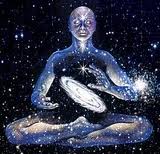
Perhaps it is the New Age Pantheistic concept of intuitive epistemology that has extended its tendrils furthest into the modern ecclesia and consequently provides the most “danger” to orthodox Christian theology.  The New Ager would contend that since god is the ultimate truth and since god is in all things; truth can therefore be perceived in all things. Nowhere is this mindset more clearly depicted than in the Postmodern theological arena. In fact, Frederick Ferre`, author of Knowing and Value: Toward a Constructive Postmodern Epistemology, indicates that it is often the practice to view the term “postmodern” as synonymous with New Ageism.[5] Indeed, a common trait of both New Age theology and Postmodern theology is their reaction against Modern epistemology.

“The fundamental issue in the move from modernism to postmodernism is       epistemology– i. e., how we know things, or think we know things. Modernism is   often pictured as pursuing truth, absolutism, linear thinking, rationalism, certainty,  the cerebral as opposed to the affective- which in turn breeds arrogance, inflexibility, a lust to be right, the desire to control. Postmodernism, by contrast,  recognizes how much of what we know is shaped by the culture in which we  live, is controlled by emotions and aesthetics and heritage, and in fact can only be  intelligently held as part of a common tradition, without overbearing claims to being true or right. Modernism tries to find unquestioned foundations on which to  build the edifice of knowledge and then proceeds with methodological rigor;     postmodernism denies that such foundations exist (it is “antifoundational”) and insists that we come to “know” things in many ways, not a few of them lacking in  rigor. Modernism is hard-edged and, in the domain of religion, focuses on truth versus error, right belief, confessionalism; postmodernism is gentle and, in the domain of religion, focuses on relationships, love, shared tradition, integrity in discussion.”[6]

Many contend that it is the postmodern reaction against modernity that has fostered renewed spiritual interest which has taken on the form of New Ageism. In New Age / Postmodern spiritualism, these spiritualities are relativistic, and tend “to be subjective and syncretistic. Often pantheistic, or even pantheistic, they are not searching for the transcendent god “out there” but are rather on an eminent search within the practitioner to find the spirit within.”[7] And, according to the New Age Postmodernist, this search for truth can be achieved by any number of means.

“Pete Rollins of ikon (Belfast, U.K.) reports, ‘We have been actively engaged with  other faiths through the evangelism project. Evangelism has an important role but   is seen as a two-way process designed to open others and ourselves to God.’   Their evangelism project is the reverse of most forms of evangelism. They visit   people of other faiths and spiritualities and allow themselves to be evangelized in  order to learn more about other walks of life. ‘We deemphasize the idea that  Christians have God and all others don’t by attempting to engage in open two-way conversations. This does not mean we have lapsed into relativism, we still  believe in the uniqueness of our own tradition, but we believe that it teaches us to be open to all. We are genuinely open to being wrong about parts and perhaps all our beliefs- while at the same time being fully committed to them.’”[8]

And again,

“Spencer Burke’s community is prepared to learn from faith traditions outside the Christian field. There is a Buddhist family in their church. As a community, the church visited a Buddhist temple. They participated in a guided meditation with  this family. Burke celebrates the many ways God is revealed. He recognizes that the Spirit as been with these people all along. The community celebrates other  traditions, and they see them as beloved children of God.”[9]

In light of the two quotes cited above, both coming from leaders in the Postmodern/Emergent movement; it is clear that New Ageism and Postmodernism have a shared epistemology- one that cannot be embraced by the Christian.

New Age theology claims that every person and all reality is God, and therefore, any “truth” our inner selves discovers is God’s truth. By contrast, Christianity asserts that man and everything that has been created, both seen and unseen, has been created by the will of God and for his glory, that truth is found in the person of Jesus Christ, not by a realization of our own innate “Christ-consciousness.” One must therefore contend that despite the fact that many within Postmodern ecclesiastical circles have embraced various New Age tenets, an exploration into New Age epistemology and the way in which New Age theology elevates both man and creation to the level of deity proves that it is incompatible with orthodox Christianity.


 1. Ron Rhodes, New Age Movement, (Grand Rapids, Michigan- Zondervan Publishing House, 1995), 9.

 2. Daren Kemp, New Age: A Guide, (George Square, Edinburg- University Press, 2004), 57.

 3. Norman L. Geisler, Christian Ethics, (Grand Rapids, Michigan- Baker Academic, 1989), 339.

 4. Dr. Sandra Clifton, New Age Lies Exposed: How to Stand Firm in God’s Truth, (Alachua, Florida- Bridge Logos, 2009), 102.

  5. Frederick Ferre`, Knowing and Value: Toward a Constructive Postmodern Epistemology, (Albany, New York- State University of New York Press, 1998), xvi.

 6. D. A. Carson, Becoming Conversant with the Emerging Church: Understanding a Movement and Its Implications, (Grand Rapids, Michigan- Zondervan, 2005), 27.

7. Lee Martin McDonald, William H. Brackney, and Craig A. Evans, (Macon, Georgia- Mercer University Press, 2007), 279,280.

 8. Eddie Gibbs and Ryan K. Bolger, Emerging Churches: Creating Community in Postmodern Cultures, (Grand Rapids, Michigan- Baker Publishing Group, 2005), 132.

 9. Ibid.

“Goo Goo G’ Joob” (part 2)

(We are continuing our look into New Ageism)

Etta D. Jackson asserts that in the New Age there will be a fusion of man’s differentiated spiritual aspirations into a New World Religion. She also foresees a fusion of intellectual and philosophical thought between people of all stations in life that will result in a spirit of inclusiveness and mutual cooperation.[1] Ultimately though, in New Age theology, while the unified consciousness is constructed in a fashion that allows for a synchronization of differing belief systems; it is man’s belief and awareness of his own godhood that is the key to transforming the world. And, according to New Age adherents, it was Jesus himself who has shown the way as an example of a self-actualized man who had reached his full potential.

The New Age theologian postulates that The Son of God . . . is not Jesus, but our combined Christ consciousness. Jesus is one of a select company, having achieved Christ consciousness. And, every person is encouraged to acquire this same level of consciousness.[2] To the New Ager, Jesus and “Christ” are separate. The “Christ” is the perfect god concept- that awareness of the divinity within. The theology espoused by the New Ager looks at Jesus as one who possessed this “Christ-consciousness” as much as and probably more than any one who has ever lived. Jesus, to the New Ager, is just another one like Buddha or Krishna who comes along to reveal to mankind the divine potential resident within us all. Many within the New Age movement insist that throughout the world today a “Christ-consciousness” is rising at an ever increasing rate, slowly moving mankind towards the “Omega Point” in which the messiah within us all will give birth to a glorious new future.[3] (Perhaps, in today’s culture where the redefinition of terms is standard practice, the Christian should bear in mind that to many New Agers, this emerging “Christ-consciousness” is the eschatological “second-coming” the Bible speaks of.)

As Jesus is no more than an example of a man who ultimately realized his own divinity, and as there is no other being to which man is accountable other than himself, one can see how concepts such as substitutionary atonement, sin and salvation hold little to no relevance within New Age theology. To the New Ager, “evil does not exist but the belief that in its existence produces negative results; we now see that similarly, sin and guilt do not exist but that it is belief in their existence which produces negativity, especially because it legitimates and induces fear. As Shirley MacLaine puts it: ‘we are not victims of the world we see. We are victims of the way we see the world. In truth, there are no victims.’ It is only by our judgmental attitudes, towards others and towards ourselves, and by psychological projection of sin and guilt upon others and ourselves, that we keep           perpetuating the circle of fear. In a way, it is our ingrained belief in original sin that we needlessly increase suffering in the world and create “negative” Karma.”[4]

Indeed, the New Ager would be more apt to define sin as that which keeps one from recognizing his own divinity. In New Age theology, it could be said that it is this “pseudo sin consciousness,” that which stifles the attainment of the “Christ-consciousness,” that is the only sin of which man could be found guilty. And even then, it is ultimately not an issue of sin and guilt, but rather unrealized potential. And it is from this failure to reach his divine potential that man must be saved. “New Age salvation implies the full realization of the principles of self-spirituality and holism; the full realization of one’s inner spiritual potential and progress towards greater and greater wholeness. Whereas in Christian cosmology salvation takes place only after death, salvation in New Age philosophy is thought of in terms of spiritual evolution, a process that may take place in one’s own life but may continue after death…”[5]

It is clear that the divinity of man is the capstone of New Age theology. “Karma takes precedence over the atonement of Jesus Christ. Sins are cultural and relative instead of offenses toward a holy God. Hell is not a place of eternal punishment but a state of mind or negative thought.”[6] By contrast, Christianity teaches that Jesus Christ was not just an example of a self-actualized man who had reached his full potential, but rather God himself clothed in flesh, crucified, dead, and resurrected-literally. The bible makes it clear that sin and hell are more than just unrealized potential or imagined cerebral apparitions. It should be obvious to any sincere student of scripture that the first major tenet of New Age theology is in no way compatible with biblical Christianity.

To be continued…


 1. Etta D. Jackson, The Role of Consciousness in Governance, (Bloomington, IN-Author House, 2009), 41, 42.

  2. “New Age Theology,” All About Worldview. http://www.allaboutworldview.org/new-age-theology.htm, (accessed October 21, 2011).

3. John P. Newport, The New Age Movement and the Biblical Worldview: Conflict and Dialogue, (Grand rapids, Michigan- Wm. B. Eerdmans Publishing Co., 1998), 12.

4. Wouter J. Hanegraff, New Age Religion and Western Culture: Esotericism in the Mirror of Secular Thought, (U.S.A. – State University of New York Press, 1998), 295.

5. Stef Aupers and Dick Houtman, Religions of Modernity: Relocating the Sacred to the Self and the Digital, (Leiden, Netherlands- Brill Hotei Publishing, 2010), 166.

6. Walter Martin, Jill Martin Rische, and Kevin Rische, The Kingdom of the Occult, (Nashville, Tennessee- Thomas Nelson, 2008), 191.

“Goo Goo G’ Joob” (part one)

I am he as you are he as you are me and we are all together

~

Lennon/McCartney

Whereas Christianity portrays God as sovereign creator of all that is, holy and entirely separate from all else; New Age theology is founded upon the idea that each individual as well as all of creation is in fact God. Although various elements of New Age thought has integrated itself into modern ecclesia via Postmodernism, a brief exploration of New Age theology will prove to the astute student of the word that such integration is to be avoided in that New Age theology is not compatible with orthodox Christianity.

Whether from Eastern religions, the occult, the new psychologies, the “frontier” theories of science, New Age politics or New Age versions of Christianity, various ideas with a common theme are converging on our culture, pressing their way to the philosophical and ideological center of society. A new world is in the  offing; a revolution in consciousness beckons. All is one-both good and evil. We  are all god-and our first-graders should no it. The mind controls all- if we only use  it. These are ideas-potent ideas-that have consequences for the whole life. They  are shaping the lives of more and more Westerners.[1]

In the quote cited above, Douglas Groothuis provides a look at the zeit geist in the 21st century as well as a succinct summation of New Age religion and theology. Many adherents of the New Age mindset would argue that they have no substantive theology in that they are not a religious movement per se. However, if one concurs with psychologist Erich Fromm’s definition of religion in which religion is defined as “any group shared system of thought and action that offers the individual a frame of orientation and an object of devotion,”[2] New Ageism clearly possesses all the qualifying characteristics of a religious movement. Indeed, New Ageism is an amalgamation of many sources including: Astrology, Channeling, Hinduism, Buddhism, Zen, Taoism, Theosophy, and Wicca.[3] In light of Fromm’s aforementioned definition of religion, it is clear that acknowledged or not; New Ageism is a religion in which man’s frame of orientation is his own created reality, and his object of devotion is himself as god.  This idea of man as god is perhaps the capstone of New Age Theology.

“According to the New Age, man must transform himself. He does this by changing his consciousness and actualizing his divine nature. In doing so he becomes aware of his inner divinity.”[4] In the early 1960s, at the dawning of the Age of Aquarius, hallucinogenic drugs were utilized to create this altered state of consciousness, but as the New Age gained momentum (largely due to the influx of Eastern religions); mystical experiences and alternative conscious altering techniques began to emerge as the new portal to divine enlightenment. According to New Age theology, “man’s self is an ideal that surrounds any demands of time and the human physical body. Expressed in another way, we are the extraterrestrial emergent[5] God. We can then conclude that our human spirit is an extraterrestrial God residing within our mortal human body, and when we meditate, our mind (intellect) comes in touch with our spirit-self.[6] Such mystical experiences led the New Agers to believe that they are truly one with the universe and a part of God. They began to believe that they had uncovered the divine potential resident in all men.[7] And, it became their goal to help everybody discover this reality.

According to New Agers, humanity can become attuned to all the powers of its godhood by achieving unity of consciousness; only the unity of all can bring the well-being of all. Unified consciousness is the key by which all men can tap into their inner-divinity.  According to New Age theology, only the unity of all can bring the well-being of all. The godlikeness within us all; perfect love, perfect wisdom, perfect understanding, perfect intelligence; can only be achieved through the unity of consciousness.[8] It is this writer’s belief that the push for global unity prevalent in the world today is a product of New age theology, and eschatological in its relevance. “The new consciousness entails a unified worldview-“we are all one- a belief in a higher power, though this being need not be clearly defined. It is about healing-healing the earth, healing the marketplace, healing the individual psychologically and physically (Heelas, 1996, p.81). Within the New age, no one belief system is better than another and all have something to offer.”[9]

To Be Continued…


  1. Donald R. Groothuis, Unmasking the New Age, (Downers Grove, Illinois-InterVarsity Press, 1986), 15.

 2. Ibid., 16.

3. Lloyd E. Sandelands, Man and Nature in God, (New Brunswick, New Jersey-Transaction Publishers, 2005), 90.

4. John Ankerburg and John Weldon, The Facts on the New Age Movement, (Eugene, Oregon- Harvest House Publishers, 1988), 21.

 5. It is ironic to this author that Mr. Mall used the word “emergent.” One is made to think of the “Emergent Church” in which many aspects of New Age theology have been incorporated.

6. Alex Mall, The New Age Chameleon, (U.S.A. – Xlibris Corporation, 2010), 55.

7. Ibid., 7.

8. “New Age Theology,” All About Worldview. http://www.allaboutworldview.org/new-age-theology.htm, (accessed October 21, 2011

9. Mara Einstein, Brands of Faith: Marketing Religion in a Commercial Age, (New York, NY- Routledge, 2008), 198.