Asleep in Babylon

Asleep in Babylon, they dream.  As the words of the Apostles and Prophets come alive around them, they dream on.

They are oblivious to the beginnings of the stirring of the beast, and the cry of, “Come out of her my people, and do not partake of her sins.” is but an echo of His voice meant for some generation long ago.

The days of the Spirit have ceased, and God no longer speaks. All that remains is to sleep, and wait for the gospel to permeate the world. It’s easy to ignore the writing on the wall when you’re convinced you know everything.

“Take the book and open the seals.”

Asleep in Babylon, they dream. Conferences and impartations, trivial pursuit is such a deadly game. They dream on.

Who is gonna reform the Reformers? Tired arguments, stale rhetoric, and doctrinal clichés doom the next generation to invent heresies. They know something is missing, but to admit what It is would blow their theology. Lullabies are plentiful in Babylon.

Institutionalized, mesmerized, idealized- It’s over guys! Yet, it’s business as usual, sleepwalking on the deck of the Titanic. There has to be some way to save all that we have built.

“Behold, I stand at the door and knock.”

Asleep in Babylon, they dream. If you ignore the riders on their horses maybe they’ll just go away. They dream on.

Wholesale slaughter, a loaf of bread for a days wage, deception, war, and pestilence abound. You better not touch my Chick fil a. The world is on fire. I wonder if they have an app for that.

IPhones, ringtones, a trumpet blast, and we’ll all be gone, ‘cause you know God wouldn’t let his people suffer. Hey, our worship team just got a smoke machine. That’ll go great with the angel feathers and the glory cloud!

“I find your deeds incomplete in the sight of my God.”

Asleep in Babylon, they dream. I heard Jesus came back Saturday night. Never mind that; services start tomorrow at eleven.

Looking In the Mirror

In prayer, I began to think about some of the people in my life. There are those who are mere acquaintances, others who I know rather well, and still others who I would consider to be intimate friends. (While I most definitely haven’t retreated into some kind of monastic solitude and ceased to interact with those outside of Christ, I should point out that I am talking about brothers and sisters in the Lord). Anyhow, I was thinking about how my closest friends love the Lord and seek him just as I do, yet; we have such different thoughts concerning life and ministry. I began to ask the Lord to help me understand theses things. Honestly, I must say as of now I haven’t received any great “revelations,” but He did show me some things – about me.

Isn’t it strange that when you go to the Lord with your complaints about “every body else,” he is usually more interested in talking about you? The Spirit brought to my mind that passage in James 4 that asks, “What is causing the quarrels and fights among you? Don’t they come from the evil desires at war within you?” I immediately began to ask God to expose my motives. I started thinking that maybe some of the difficulty I was having with my thoughts about others was due to my own selfish desires. I wondered if perhaps my expectations of others had become centered on my desires instead of the will of God. I thought of how strange it is that in the midst of our pursuing Jesus, we are still able to hurt each other; if not outright, in the secret place of our hearts. Something just didn’t seem right about that. I began to suspect that perhaps even my supposed selflessness was selfish, and that my love for others was shallow and disingenuous.

As I waited before the Lord, I began to ask him if I had come to cherish the act of ministry more than the people to whom I minister. Am I truly seeking to build up and equip the body of Christ, or am I in love with preaching, teaching, and singing? Am I holding on to my position out of fear that if I let go, I wont be able to “minister” as I have I have become accustomed to doing? Has my service to God become about me? Perhaps the conflict regarding ministry I sometimes sense with others is merely a result of my own selfish desires.

Pondering these things in his presence, I began to cry out for God to heal me. I thought of David’s prayer to God for a clean heart and a right spirit. I was reminded that it is the willing spirit that the joy of fellowship with God produces that yields fruitful ministry. I was brought back to the realization that knowing and loving him is what life is all about. Anything that is pleasing to the Father is produced out of our intimacy with Jesus. I don’t have the capacity within myself to truly love or sincerely minister. I need God’s Spirit to expose me, and give me discernment as to my motives, and then produce in me the heart of Jesus. Yeah, there are always going to be trials, especially when it comes to relationships (real boats rock), but honestly; I’m beginning to think that the biggest problem I have with everybody else is me.

“So Peter seeing him said to Jesus, ‘Lord, and what about this man?’ Jesus said to him, ‘If I want him to remain until I come, what is that to you? You follow Me!’”

Gettin’ Your Mind Right

“But as for me, my feet had almost stumbled,
my steps had nearly slipped.
For I was envious of the arrogant
when I saw the prosperity of the wicked.” (Psalms 73:2, 3)

The guy who wrote Psalms 73 was named Asaph. He was what you might call the first worship leader. He came into leadership as David came to power as Israel’s king. We know that Asaph was the author of a number of the Psalms, as well as being a prophet, and a skilled musician. He saw Israel’s golden years under David, and then later witnessed the deterioration of the kingdom as Solomon turned from following after the Lord. Asaph was a stable leader and faithful follower of God. Yet, there came a point in his life when he became disillusioned and almost lost his way.

Asaph began to look around him, and he observed that the people who did not serve the Lord were living the “high life.” They were full of pride, always at ease, and even mocked the things of God. He noticed that they were cruel and violent, not hesitating to oppress whomever they had to in order to get what they wanted. “They boast against the very heavens, and their words strut throughout the earth. “ ‘What does God know?’ they ask. ‘Does the Most High even know what’s happening?’” What Asaph saw blew his mind, rocked his whole theology, and he was close to slipping away from his faith in God. He became envious of the wicked.

Envy is akin to coveting, but it’s a lot deeper than that. Being envious is wanting what others have, and even going so far as to desire ill will upon those of whom you are envious. Asaph desired the apparent ease and pain free life he observed that the wicked enjoyed. He also desired that they be punished. As he tried to understand these things, he began to question the value of being a follower of God at all. He wonders, “Did I keep my heart pure for nothing? Did I keep myself innocent for no reason? I get nothing but trouble all day long; every morning brings me pain.” Asaph became bitter inside, and this bitterness was close to destroying him.

Has that ever happened to you? Have you ever looked around you, seen the “ease” with which those who don’t serve God seem to be living, and in your heart envied them? The world is in love with sex, power, wealth, pleasure, and it’s in your face everyday. All of the TV shows, commercials and music of our culture say, “Come on man. Quit being so hard on yourself, you deserve to live a little.” We see a godless society pridefully flaunt their disdain for God, and nothing whatsoever happens to them. In fact, they are enjoying life, while you encounter trial after trial. They are without a care in the world while you seem to be carrying the world on your shoulders. If we’re not careful, we can get to a point where we say, “God, you are not fair. I serve you and get nothing but trouble. I’m done!” Ever been there? Asaph, worship leader extraordinaire was. He needed to get his mind right and he did- in worship.

“So I tried to understand why the wicked prosper. But what a difficult task it is. Then I went into your sanctuary, O God, and I finally understood the destiny of the wicked.” It was when he went before the Lord that he was able to get the proper perspective. As Asaph worshipped, he saw that the wicked were on a slippery path that eventually would lead them sliding over the cliff of destruction. He may have “almost slipped,” but those who reject God would slip beyond recovery. He understood that their ease and prosperity was like a dream, void of any true substance. He must have shuddered when he realized that “ In an instant they [the wicked] are destroyed, completely swept away by terrors.” Asaph also realized that he had forgotten that the Lord was his portion. He said, “I’ve been acting and thinking like an animal.” (v22)  The Lord renewed his mind and he responded by acknowledging that God was all he truly needed, the very strength of his heart. He again saw the reality that in spite of all the hardships, God was with him, guiding him, and leading him to glory. He saw that his envy of the wicked was senseless as he came to the sobering realization that all who reject God will ultimately be destroyed. It was in worship that he got his mind right and once again was able to say, “ But as for me, how good it is to be near God! I have made the Sovereign Lord my shelter, and I will tell everyone about the wonderful things you do.”

Are you discouraged? Do you spend more time thinking about how God ought to “stick it to those sinners” than you do worshiping Jesus? Have you become envious of how the world seems to have it so easy, while you have it so rough? Christian, you are called to share in the glory of Jesus. Remember, “… be truly glad. There is wonderful joy ahead, even though you have to endure many trials for a little while. These trials will show that your faith is genuine. It is being tested as fire tests and purifies gold—though your faith is far more precious than mere gold. So when your faith remains strong through many trials, it will bring you much praise and glory and honor on the day when Jesus Christ is revealed to the whole world.” Consider the words of Paul, “What if God, desiring to show his wrath and to make known his power, has endured with much patience vessels of wrath prepared for destruction, in order to make known the riches of his glory for vessels of mercy, which he has prepared beforehand for glory—even us whom he has called, not from the Jews only but also from the Gentiles?”

Don’t let envy of the world lead you into having a bitter, unbelieving heart. Come to the feet of the One who can renew your strength and get your mind right. Jesus is your portion. He is the strength of your life, and being near him is truly all you need. And, as you are renewed, you will be able to tell others of the wonderful things he has done.

“Goo Goo G’ Joob” (conclusion)

(Unfortunately, many New Age practices and beliefs have been adopted by many who call themselves Christians. It is my prayer that this series has brought to light the incompatibility of Christianity and New Age theology. This is the last segment of “Goo Goo G’ Joob,” and if you’ve not already done so; I hope you will take the time to read  parts 1&2 of this series.)

If the capstone of New Age theology is the divinity of man, the cornerstone upon which their theology is built would have to be pantheism. Indeed, it is the New Age concept of pantheism on which all New Age theology is built. In New Age theological pantheism, god is all and all is god. In fact, there is nothing but God. Consequently, in New Age theology, there is no distinction between the creator and the creation.[1] At the beginning of this discourse it was stated that various elements of New Age thought had integrated into modern ecclesia, and the concept of pantheism is one such example. Some “Christian New Agers” such as Matthew Fox have adopted a compromised pantheistic position. They believe that while God “may be found in everything, God is something more than the totality of all things. “[This form of] Pantheism attempts to retain Christian notions of a fundamental divide between God and creation, while at the same time emphasizing their unity and interactivity.”[2]

It has been said that the “force”as depicted in the Star Wars  movies best characterizes New Age pantheism in which nature is not only a manifestation of God; it is very much alive, and its life- force is considered one great organism. In Star Wars, Yoda declares, “My ally is the Force, and a powerful ally it is. Life creates it and makes it glow. Its energy surrounds us and binds us…Feel the Force around you. Here… between you and me and the tree and that rock.”[3] Dr. Sandra Clifton agrees that this Yodistic Star Wars Pantheistic concept is crucial to New Age thought. In her book, New Age Lies Exposed: How to Stand Firm in God’s Truth she quotes Theologian and researcher James Herrick as saying, “…and pantheism is crucial to the New Religious Synthesis [Herrick’s term for New Age or New Thought]. Pantheism rejects the notion of God as personal or sovereign, instead finding divinity to be an impersonal force, energy, spirit, consciousness or mind in all things…The Other Spirituality’s god is a force to be managed, a potential to be tapped, a consciousness to be experienced.”[4]

Perhaps it is the New Age Pantheistic concept of intuitive epistemology that has extended its tendrils furthest into the modern ecclesia and consequently provides the most “danger” to orthodox Christian theology.  The New Ager would contend that since god is the ultimate truth and since god is in all things; truth can therefore be perceived in all things. Nowhere is this mindset more clearly depicted than in the Postmodern theological arena. In fact, Frederick Ferre`, author of Knowing and Value: Toward a Constructive Postmodern Epistemology, indicates that it is often the practice to view the term “postmodern” as synonymous with New Ageism.[5] Indeed, a common trait of both New Age theology and Postmodern theology is their reaction against Modern epistemology.

“The fundamental issue in the move from modernism to postmodernism is       epistemology– i. e., how we know things, or think we know things. Modernism is   often pictured as pursuing truth, absolutism, linear thinking, rationalism, certainty,  the cerebral as opposed to the affective- which in turn breeds arrogance, inflexibility, a lust to be right, the desire to control. Postmodernism, by contrast,  recognizes how much of what we know is shaped by the culture in which we  live, is controlled by emotions and aesthetics and heritage, and in fact can only be  intelligently held as part of a common tradition, without overbearing claims to being true or right. Modernism tries to find unquestioned foundations on which to  build the edifice of knowledge and then proceeds with methodological rigor;     postmodernism denies that such foundations exist (it is “antifoundational”) and insists that we come to “know” things in many ways, not a few of them lacking in  rigor. Modernism is hard-edged and, in the domain of religion, focuses on truth versus error, right belief, confessionalism; postmodernism is gentle and, in the domain of religion, focuses on relationships, love, shared tradition, integrity in discussion.”[6]

Many contend that it is the postmodern reaction against modernity that has fostered renewed spiritual interest which has taken on the form of New Ageism. In New Age / Postmodern spiritualism, these spiritualities are relativistic, and tend “to be subjective and syncretistic. Often pantheistic, or even pantheistic, they are not searching for the transcendent god “out there” but are rather on an eminent search within the practitioner to find the spirit within.”[7] And, according to the New Age Postmodernist, this search for truth can be achieved by any number of means.

“Pete Rollins of ikon (Belfast, U.K.) reports, ‘We have been actively engaged with  other faiths through the evangelism project. Evangelism has an important role but   is seen as a two-way process designed to open others and ourselves to God.’   Their evangelism project is the reverse of most forms of evangelism. They visit   people of other faiths and spiritualities and allow themselves to be evangelized in  order to learn more about other walks of life. ‘We deemphasize the idea that  Christians have God and all others don’t by attempting to engage in open two-way conversations. This does not mean we have lapsed into relativism, we still  believe in the uniqueness of our own tradition, but we believe that it teaches us to be open to all. We are genuinely open to being wrong about parts and perhaps all our beliefs- while at the same time being fully committed to them.’”[8]

And again,

“Spencer Burke’s community is prepared to learn from faith traditions outside the Christian field. There is a Buddhist family in their church. As a community, the church visited a Buddhist temple. They participated in a guided meditation with  this family. Burke celebrates the many ways God is revealed. He recognizes that the Spirit as been with these people all along. The community celebrates other  traditions, and they see them as beloved children of God.”[9]

In light of the two quotes cited above, both coming from leaders in the Postmodern/Emergent movement; it is clear that New Ageism and Postmodernism have a shared epistemology- one that cannot be embraced by the Christian.

New Age theology claims that every person and all reality is God, and therefore, any “truth” our inner selves discovers is God’s truth. By contrast, Christianity asserts that man and everything that has been created, both seen and unseen, has been created by the will of God and for his glory, that truth is found in the person of Jesus Christ, not by a realization of our own innate “Christ-consciousness.” One must therefore contend that despite the fact that many within Postmodern ecclesiastical circles have embraced various New Age tenets, an exploration into New Age epistemology and the way in which New Age theology elevates both man and creation to the level of deity proves that it is incompatible with orthodox Christianity.


 1. Ron Rhodes, New Age Movement, (Grand Rapids, Michigan- Zondervan Publishing House, 1995), 9.

 2. Daren Kemp, New Age: A Guide, (George Square, Edinburg- University Press, 2004), 57.

 3. Norman L. Geisler, Christian Ethics, (Grand Rapids, Michigan- Baker Academic, 1989), 339.

 4. Dr. Sandra Clifton, New Age Lies Exposed: How to Stand Firm in God’s Truth, (Alachua, Florida- Bridge Logos, 2009), 102.

  5. Frederick Ferre`, Knowing and Value: Toward a Constructive Postmodern Epistemology, (Albany, New York- State University of New York Press, 1998), xvi.

 6. D. A. Carson, Becoming Conversant with the Emerging Church: Understanding a Movement and Its Implications, (Grand Rapids, Michigan- Zondervan, 2005), 27.

7. Lee Martin McDonald, William H. Brackney, and Craig A. Evans, (Macon, Georgia- Mercer University Press, 2007), 279,280.

 8. Eddie Gibbs and Ryan K. Bolger, Emerging Churches: Creating Community in Postmodern Cultures, (Grand Rapids, Michigan- Baker Publishing Group, 2005), 132.

 9. Ibid.

“Goo Goo G’ Joob” (part 2)

(We are continuing our look into New Ageism)

Etta D. Jackson asserts that in the New Age there will be a fusion of man’s differentiated spiritual aspirations into a New World Religion. She also foresees a fusion of intellectual and philosophical thought between people of all stations in life that will result in a spirit of inclusiveness and mutual cooperation.[1] Ultimately though, in New Age theology, while the unified consciousness is constructed in a fashion that allows for a synchronization of differing belief systems; it is man’s belief and awareness of his own godhood that is the key to transforming the world. And, according to New Age adherents, it was Jesus himself who has shown the way as an example of a self-actualized man who had reached his full potential.

The New Age theologian postulates that The Son of God . . . is not Jesus, but our combined Christ consciousness. Jesus is one of a select company, having achieved Christ consciousness. And, every person is encouraged to acquire this same level of consciousness.[2] To the New Ager, Jesus and “Christ” are separate. The “Christ” is the perfect god concept- that awareness of the divinity within. The theology espoused by the New Ager looks at Jesus as one who possessed this “Christ-consciousness” as much as and probably more than any one who has ever lived. Jesus, to the New Ager, is just another one like Buddha or Krishna who comes along to reveal to mankind the divine potential resident within us all. Many within the New Age movement insist that throughout the world today a “Christ-consciousness” is rising at an ever increasing rate, slowly moving mankind towards the “Omega Point” in which the messiah within us all will give birth to a glorious new future.[3] (Perhaps, in today’s culture where the redefinition of terms is standard practice, the Christian should bear in mind that to many New Agers, this emerging “Christ-consciousness” is the eschatological “second-coming” the Bible speaks of.)

As Jesus is no more than an example of a man who ultimately realized his own divinity, and as there is no other being to which man is accountable other than himself, one can see how concepts such as substitutionary atonement, sin and salvation hold little to no relevance within New Age theology. To the New Ager, “evil does not exist but the belief that in its existence produces negative results; we now see that similarly, sin and guilt do not exist but that it is belief in their existence which produces negativity, especially because it legitimates and induces fear. As Shirley MacLaine puts it: ‘we are not victims of the world we see. We are victims of the way we see the world. In truth, there are no victims.’ It is only by our judgmental attitudes, towards others and towards ourselves, and by psychological projection of sin and guilt upon others and ourselves, that we keep           perpetuating the circle of fear. In a way, it is our ingrained belief in original sin that we needlessly increase suffering in the world and create “negative” Karma.”[4]

Indeed, the New Ager would be more apt to define sin as that which keeps one from recognizing his own divinity. In New Age theology, it could be said that it is this “pseudo sin consciousness,” that which stifles the attainment of the “Christ-consciousness,” that is the only sin of which man could be found guilty. And even then, it is ultimately not an issue of sin and guilt, but rather unrealized potential. And it is from this failure to reach his divine potential that man must be saved. “New Age salvation implies the full realization of the principles of self-spirituality and holism; the full realization of one’s inner spiritual potential and progress towards greater and greater wholeness. Whereas in Christian cosmology salvation takes place only after death, salvation in New Age philosophy is thought of in terms of spiritual evolution, a process that may take place in one’s own life but may continue after death…”[5]

It is clear that the divinity of man is the capstone of New Age theology. “Karma takes precedence over the atonement of Jesus Christ. Sins are cultural and relative instead of offenses toward a holy God. Hell is not a place of eternal punishment but a state of mind or negative thought.”[6] By contrast, Christianity teaches that Jesus Christ was not just an example of a self-actualized man who had reached his full potential, but rather God himself clothed in flesh, crucified, dead, and resurrected-literally. The bible makes it clear that sin and hell are more than just unrealized potential or imagined cerebral apparitions. It should be obvious to any sincere student of scripture that the first major tenet of New Age theology is in no way compatible with biblical Christianity.

To be continued…


 1. Etta D. Jackson, The Role of Consciousness in Governance, (Bloomington, IN-Author House, 2009), 41, 42.

  2. “New Age Theology,” All About Worldview. http://www.allaboutworldview.org/new-age-theology.htm, (accessed October 21, 2011).

3. John P. Newport, The New Age Movement and the Biblical Worldview: Conflict and Dialogue, (Grand rapids, Michigan- Wm. B. Eerdmans Publishing Co., 1998), 12.

4. Wouter J. Hanegraff, New Age Religion and Western Culture: Esotericism in the Mirror of Secular Thought, (U.S.A. – State University of New York Press, 1998), 295.

5. Stef Aupers and Dick Houtman, Religions of Modernity: Relocating the Sacred to the Self and the Digital, (Leiden, Netherlands- Brill Hotei Publishing, 2010), 166.

6. Walter Martin, Jill Martin Rische, and Kevin Rische, The Kingdom of the Occult, (Nashville, Tennessee- Thomas Nelson, 2008), 191.

Morgan Freeman & New Age Theology

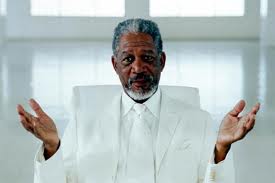
This just in: Morgan Freeman says that he is God. The first thing that may go through your mind is, “Oh my goodness, he must have gone crazy!” Not necessarily. To be honest, this is a typical New Age concept. In fact, according to New Age thought or Cosmic Humanism as it is referred to by some; you, me, and everything else are God as well. I don’t know how much you’ve looked into New Age Theology, but I thought with Mr. Freeman’s latest “revelation,” now might be a good time to share with you a little of what I’ve discovered.

I was sharing with a New Ager once, and I told him that I agreed with a lot of what he said, but that I had to go with Jesus’ words when he said, “I am the way, the truth, and the life; no man comes to the Father except through me.” I went on to share with this man that Jesus is God come in the flesh. Without batting an eye, he responded, “Well yeah, we all are.”
If you are about the business of being a disciple of Jesus, you will no doubt come into contact with New Age(ism) in one form or another. I put together the following outline that will give you the skinny on New Age(ism)/ Cosmic Humanism. I pray this helps you to be better equipped to share the gospel with people caught up in this deception

            New Age Theology and the Church

                Whereas Christianity portrays God as sovereign creator of all that is, holy and entirely separate from all else, New Age theology is founded upon the idea that each individual as well as all of creation is in fact God. Although various elements of New Age thought has integrated itself into the modern church, the astute student of the word recognizes that such integration is to be avoided in that New Age theology is not compatible with orthodox Christianity.

I. New Age theology (Cosmic Humanism) forms the foundation for all other aspects of its worldview.[1]

A. “The New Age movement differs from Christianity, Islam, and the secular worldviews in that it embraces neither theism nor atheism”.[2]

B. “Cosmic Humanism begins by denying the preeminence of any purported special revelation over any other.”[3]

C. “Cosmic Humanists believe that the Bible is no more the word of God than is the Qur’an, or the teachings of Confucius. New Age advocate David Spangler says, ‘We can take all the scriptures, and all the teachings, and all the tablets, and all the laws, and all the marshmallows and have a jolly good bonfire and marshmallow roast, because that is all they are worth.’”[4].

D. Christianity views the Bible as God’s revelation to man, as that which is “inspired by God and profitable for teaching, for reproof, for correction, for training in righteousness; that the man of God may be adequate, equipped for every good work. (II Tim. 3:16, 17)

II. New Age theology sees Jesus as just an example of the potential of all men.

A. In that the Cosmic Humanist views the Bible as just another book, the significance of Jesus’ life, death, and resurrection is nullified.[5]

B. “The Cosmic Humanist sees Christ’s life as important only in the sense that it showed humanity to be capable of achieving perfection, even godhood.”[6]

1. The significance of incarnation and resurrection is not that Jesus was a human like us but rather that we are gods like him—or at least have the potential to be.[7]

2. The New Age theologian to postulates that “The Son of God . . . is not Jesus but our combined Christ consciousness.[8]

3. Jesus is looked on as one of a select company, having achieved Christ consciousness. Every person is encouraged to acquire this same level of consciousness.[9]

C. Christianity teaches that Jesus Christ was not just an example of a self-actualized man who had reached his full potential, but rather God himself clothed in flesh, crucified, dead, and resurrected.

1. John 1:1-3 teaches Jesus is God.

2. Colossians 1: 15, 16 teaches Jesus is both God and creator.

3. Romans 1:4 teaches that Christ is risen from the dead and proclaimed as the Son of God.

III. The core of New Age theology is that, “I am God.”[10]

A. According to New Age theology each of us has access to a supraconscious, creative, integrative, self-organizing, intuitive mind whose capabilities are apparently unlimited; this is the part of our consciousness that constitutes our God-likeness.[11]

B. According to New Age theology, sooner or later every human being will feel a call from the cosmos to ascend to godhood.[12]

C. “The Cosmic Humanist grants each individual the power of determining reality by creating or co-creating truth.”[13]

1. “Special revelation need not exist in books or in any other form outside of us, because each of us has our own special revelation in our higher consciousness, our own ability to get in touch with the part of us that is God.”[14]

2. “Inner soul-searching becomes the only significant means of discovering truth.”[15]

D. Christianity teaches that man is not God, but rather a creation of the one true God, who cannot by reason of his own faculties, comprehend God, much less be God.

1. Psalms 139: 13-16 reveals that man is a creation of God.

2. Genesis 1 teaches that man is a creation of God.

3. Isaiah 55:8, 9 teaches that God’s ways and thoughts are not comparable to man’s.

IV. New Age Theology consists of an “all is one consciousness.”

A. “It is important to understand that the belief that every individual is God and God is every individual is tied inextricably to the concept of consciousness.”[16]

1. “Because New Age theology has this “all is one” mentality, Cosmic Humanists necessarily believe that humanity can become attuned to all the powers of its godhood by achieving unity of consciousness.”[17]

2. New Age theology adheres to the “godlikeness within us; the perfect love, the perfect wisdom, the perfect understanding, the perfect intelligence, and when we do that, we create back to that old, that essential oneness which is consciousness.”[18]

B. According to New Age theology, “only the unity of all can bring the well-being of all.”[19]

C. The Bible teaches that God has dealt harshly in the past when man has attempted to assert his “godliness” through unity, and that only in Christ can men be truly united.

1. Genesis 11 tells of God’s reaction to a unified humanity’s attempt at godhood.

2. Galatians 3:28 speaks of the unity, the “oneness” we have in Christ.

V. New Age theology espouses the idea of reincarnation.[20]

A. The Bible, in Hebrews 9:27 teaches that once a man dies, then comes judgment.

B. II Samuel 12:23 implies that those who deny will not return in this life.

VI. New Age Theology is pantheistic in that it asserts that everything is God.

A. Pantheism is the very foundation of New Age theology.[21]

B. “Humanists worship the creation and the creator at the same time. For them, there is no difference.”[22]

C. New Age theology asserts that since we cannot “delineate between God and ourselves, how can we be certain that we can delineate between other living or dead things and God? Indeed, if all is one, perhaps everything that exists is God.”[23]

D. The Bible teaches that God is holy and entirely separate from his creation.

1. Romans 1:20 teaches that God’s attributes can be seen in his creation, but by definition he remains distinct from it.

2. Numbers 23:19 clearly says that God is not man, and therefore, man cannot be God.

3. Romans chapter one condemns the worship of creation.

Perhaps to summarize New Age theology, one could say,” every person and all reality is God, and therefore that any “truth” our inner self discovers is God’s truth. If we fail to realize our godhood in this lifetime, never fear! We’ll soon have another incarnation and another chance to achieve Christ consciousness. Ultimately, every person will achieve godhood, and total unity will be restored.”[24] By contrast, Christianity asserts that man along with everything else that has been created, both seen and unseen, has been created through and for Jesus .

BIBLIOGRAPHY

“New Age Theology,” All About Worldview. http://www.allaboutworldview.org/new- age-theology.htm,


            1. “New Age Theology,” All About Worldview. http://www.allaboutworldview.org/new-age-theology.htm, (accessed October 21, 2011).

2. Ibid.

3. Ibid.

4. Ibid.

5. Ibid.

6. Ibid.

7. Ibid.

8. Ibid.

9. Ibid.

10. Ibid.

11. Ibid.

12. Ibid.

13. Ibid.

14. Ibid.

15. Ibid.

16. Ibid.

17. Ibid.

18. Ibid.

19. Ibid.

20. Ibid.

21. Ibid.

22. Ibid.

23. Ibid.

24. Ibid.

Log Jam

Did you know that you, yes you, were created so that God might be glorified in your life? God wants to take the good, the bad, and the ugly, transform you through your faith in Jesus, and then put you on display so that the people in your life will come face to face with the living God. Have you ever thought of this, that there are people who will never get to know Jesus if they don’t get introduced to him by you?

Starting in the Old Testament, go through the Bible and search out the scriptures that speak of God’s purpose in using his people to reveal himself to the world. Even the past that you so desperately try to forget about can be used by God as a tool for his glory. Look, we’ve all sinned, we’ve all terribly missed the mark of God’s holiness, but he has made a way for us to experience his forgiveness and restoration. And, he wants to use this process in your life as an object lesson, giving others something tangible to see, so that they too can come and experience his love. Someone out there needs to know what you’ve been through and how Jesus saved and is saving you. They need to hear it from you, and see Him in you! Somebody is waiting for you to allow God to use you for some “show & tell.”

You know what a lumberjack is right (google it)?  Huge numbers of trees are harvested and processed into forestry products by logging companies. Lumberjacks  are the guys that cut down those trees. One way they get this massive number of trees from one spot to another, is by floating all these logs down the river. Well, occasionally a log  gets turned askew and stops the flow, creating a log-jam. So, you got this one log (a “key-log”) that is keeping the rest of the logs from reaching their destination. Did you know that you are a “key-log” in someone’s life, and they are waiting for you to get “straightened out” so that they can get to Jesus? It’s not some “professional” preacher or evangelist that holds the key to saving your family and friends- it’s you. You are the key.

It all starts with you giving your life to Jesus. He invites us to come, turn away from our sin, and put our trust in him. He is the One who can get you “straightened out” so that all those behind you, caught up in the “log-jam,” can experience what it means to truly be alive in Him.

The Fellowship Of The King


“God is faithful, through whom you were called into fellowship with His Son, Jesus Christ our Lord.” (I Corinthians 1:9)

The word fellowship denotes intimacy, communion, reciprocation, community, relationship, etc… How wonderful it is that we have been called into fellowship with Jesus. For too many who profess faith, Jesus is simply a historical character in a book. They know about him, but don’t really know him. So many are trying their best to be good, stop sinning, and live like a good Christian. All the while they are frustrated, close to despair, and on the verge of giving up. All too often we have opted for a set of rules and empty religious rituals instead of fellowship with Jesus. Being good gets old, and if you’re like me; you’ll break the rules. Thank God, we can have true intimacy with a real, living Savior. We are called to fellowship!!

We are called to hear his voice. We can know his touch. We can be transformed by his Spirit. We can KNOW HIM!! We’ve all heard the old saying, “It’s not what you know, but who you know.” Well, in this case, it’s absolutely true.  And the cool thing is, he wants us to know him!! He has removed everything that would separate us from himself by the blood of his cross. Why has he done this? He wants us to have a real relationship with him. This brings him glory.

It has been said that the reason we exist is to glorify God, and enjoy him. How do we glorify him? How do we enjoy him? It is by the fellowship we have with Jesus. Didn’t Jesus say that we are to abide in him like branches in a vine? Didn’t he say that this fellowship would produce fruit that glorified the Father?  You can read all about someone, you can know their bio inside and out, but until you spend time with them; you don’t really know them. You are called by God to have intimate communion with Jesus. Let me put it this way, fellowship with Jesus is eternal life.

Examine Yourselves (part 4)

Can we know that we have eternal life? If so, how do we know? We have begun a series in order to explore what the Bible has to say about these very questions. (I encourage you to check out parts 1-3 of Examine Yourselves if   you’ve not done so.)

We are continuing our study into how we can know that we have eternal life. We stated in part one of  Examine Yourselves that sometimes the way to help discover the reality of what something is, is to first consider what it is not. Previously, we have discussed the fact that salvation is not simply a self-help tool designed to make me the best me I can be. We’ve discovered that salvation isn’t merely keeping a list of do’s & don’ts. We’ve examined the fact that the presence of the miraculous is not proof- positive of communion with Christ. In part four we will see that mere mental assent to the facts concerning Jesus does not mean one is in communion with Christ.

Later, as we get further into our study, we will discover how Jesus taught us that a true relationship with him is a right now, on going, present tense reality. One can be aware of and acknowledge the reality of certain facts and not be impacted in any real way. Think for a moment of all the things you know to be true. How many of these truths are impacting the right now of your life?

Let me try to illustrate what I’m talking about by using an example out of the Old Testament  story of Saul & David (I Samuel 23-26). Remember David had fled for his life, fleeing from a tormented, jealous king who had every intention of killing him. You will find in reading this story that twice David spared Saul’s life. Saul’s response to David’s mercy went something like this, “David, David, is that you? Is that your voice. You are a better man than me in that you have spared my life. I have sinned, played the fool and committed serious error.” See, Saul knew he was wrong. He knew he had sinned, but; if you read the story in its entirety you find that he never changed his behavior. Simply knowing and acknowledging the facts did not impact his life in any authentic lasting way.

Looking in the New Testament we find another example of someone who knew the truth in the person of Herod. John 6:20 says this, “for Herod respected John; and knowing that he was a good and holy man, he protected him. Herod was greatly disturbed whenever he talked with John, but even so, he liked to listen to him.” (NLT)  Herod knew the truth, but it had no real impact on his life. He was not changed by what he knew. Herod went so far as to protect John for a while, he even seemed to enjoy the effect John’s preaching had upon him, but; he remained the same old Herod. I’m sure you remember how this whole thing ended up with John’s head on a platter.

In John 3  we find the story of Nicodemus, a Pharisee who came inquiring of Jesus by night. He says to Jesus, “Rabbi, we know that you have come from God as a teacher; for no one can do the signs you do unless God is with him.” I love Jesus’ response, ” I’m telling you the absolute truth, unless you are born again you can’t see the kingdom of God.” Here  we find a very learned and religious man saying what he thought he knew about Jesus, and Jesus goes on to tell him that one must born again and totally turned into a new creation to truly know and see the Kingdom. Unless we are born again, unless we are totally and completely impacted by Jesus, we don’t even know what we think we know. (On a side note, there is so much talk about the Kingdom today, but; unless we are born again, we don’t even know what we’re talking about.)

The point of all this is if we truly know, if we truly believe, our lives will show it. Once, while preaching a sermon, I wanted to illustrate the fact that authentic knowledge and belief is always accompanied by corresponding action, so; I put it like this (In hind- sight I could’ve picked a better illustration): “If you folks believed, if somehow you knew that I was going to take out a shotgun and just start blasting away (for just a millisecond I saw questioning uncertainty and a little, ‘Has he finally gone crazy’ look in their eyes); you would all run!” True, perhaps in the society we live in that’s not the best example I could have used, but; you get my point. If you really know something, if you really believe something; your life will show it.

So, we see that salvation is not merely knowing the facts and acknowledging them as being true. One can know the truth about many things and yet have no serious interaction with it. One can know the truth about Jesus and yet have no true communion with him.

We said back in part two of this series that we would approach these sections on what salvation is not in a Myth Buster kind of way, and; the next section may indeed be the biggest Myth Buster of them all.

To be continued…