Smyrna: Stop Being Afraid!

“Do not fear what you are about to suffer. Behold, the devil is about to throw some of you into prison, that you may be tested, and for ten days you will have tribulation. Be faithful unto death, and I will give you the crown of life.” (Revelation 2:10)

In our last discussion about the church in Smyrna, we discovered that the church was most definitely in a situation that could cause them to be afraid. Their very lives could be forfeit at any time. Rome and the Jews presented a clear and present danger for the “poor,” suffering church. (You can read about that here: https://nliworship.com/2013/07/22/smyrna-i-know-you/ )

In the midst of all of they were facing, Jesus tells them not to fear. When you look at the way it’s written in the Greek ( μηδν φοβοῦ) , I think maybe a better way to put it is, “Stop being afraid.” They were, at that moment, terrified, and Jesus commands them to stop being afraid. The Lord goes on to tell them that the devil is going to throw some of them in prison that they maybe tested and tried. He says that they will have tribulation for ten days. Now, there are a variety of opinions as to the meaning of ten days. Some take it literally, some view it as a period of persecution under a series of ten different Roman Emperors, some see it as a ten year period of tribulation, etc… I simply want to point out that although the devil was active in the persecution, it was for a limited time, and Jesus was still in control. These trials would refine them and test them the way gold is tried by fire. The trials would actually reveal the beauty of their faith. And those who were faithful would be given the crown of life. It is interesting that ancient Smyrna was referred to as the “Crown of Asia.” The pagan temples built on the hill of Pagos were said to have resembled a crown, and there were other crowns that the church would have been familiar with. But Jesus assures the church in Smyrna that their faithfulness would earn them a crown of eternal value.

Although we do not face trials that could even remotely be compared to what the church in Smyrna faced, it seems like so many Christians in America today are afraid. We look at the direction our country is heading, we see conspiracies under every bush (or Obama), and many are afraid. However, in contrast to the words of Jesus to the church in Smyrna by which he exhorted them to respond to fear with faithfulness, the response to our fear is to buy guns, get lawyers, and stand up for our rights. I wonder just what it is we’re afraid of. Could it be that we are afraid that that we will lose our precious 501c3 status. Have we fallen so in love with the American dream that we have forgotten who we are? I know we don’t like to hear it, but sometimes being a good American and being a genuine Christian are not the same thing. We run from trials and suffering, after all; God doesn’t want his children to suffer does he? Is the bottom line that we’re afraid someone is going to come along and take all of our stuff? Jesus says to us, “Stop being afraid!”

We have forgotten that “There is wonderful joy ahead, even though you have to endure many trials for a little while. These trials will show that your faith is genuine. It is being tested as fire tests and purifies gold—though your faith is far more precious than mere gold. So when your faith remains strong through many trials, it will bring you much praise and glory and honor on the day when Jesus Christ is revealed to the whole world.You love him even though you have never seen him. Though you do not see him now, you trust him; and you rejoice with a glorious, inexpressible joy. The reward for trusting him will be the salvation of your souls.”(1Peter 1:6-9 NLT)

The trials and suffering that may be heading our way will not take the Lord by surprise. He may not spare us having to go through tribulation like the church in Smyrna endured, but he assures us that he is in control and we can be faithful- even to our death. I believe we American Christians need to get a new outlook on suffering, an outlook that has nothing to do with being American, but everything to do with following Jesus. “For God is pleased with you when you do what you know is right and patiently endure unfair treatment. Of course, you get no credit for being patient if you are beaten for doing wrong. But if you suffer for doing good and endure it patiently, God is pleased with you. For God called you to do good, even if it means suffering, just as Christ suffered for you. He is your example, and you must follow in his steps. He never sinned, nor ever deceived anyone. He did not retaliate when he was insulted, nor threaten revenge when he suffered. He left his case in the hands of God, who always judges fairly. He personally carried our sins in his body on the cross so that we can be dead to sin and live for what is right. By his wounds you are healed. Once you were like sheep who wandered away.
But now you have turned to your Shepherd, the Guardian of your souls.” (1Peter 2:21-25 NLT) Our suffering is to be reconciliatory. Jesus’ suffering reconciled us to God, and our perseverance in suffering will not only benefit us, but may very well be the testimony others see and come to faith.

My fellow American Christians let us stop being afraid, and trust in the One who offers the crown of life to those who are faithful .

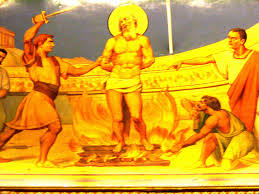
 

Smyrna: I Know You

“I know your tribulation and your poverty (but you are rich) and the slander of those who say that they are Jews and are not, but are a synagogue of Satan.” (Revelation 2:9)

We are continuing our look into the letter to the church in Smyrna found in Revelation 2:8-11. As I stated last time, I want to take the letter verse by verse, look at some history that will help us understand how the church at Smyrna may have received the letter originally, and then hopefully point out some relevant application for us. Let’s look at verse nine.

Smyrna was a city that had seen its share of war, destruction, and death, but by the time John wrote his letter to the church located there, Smyrna’s loyalty to Rome had paid off handsomely and it had become a very prosperous city indeed. It boasted a famous stadium, library, and the largest public theater in Asia. Smyrna was rich, but right in the midst of all the wealth Smyrna possessed was a group of believers who suffered intense persecution and poverty. The persecution came from two main sources: Jews and Rome itself.

A large population of Jews occupied Smyrna, and they despised the Christians. The Christians were associated with Judaism yet their claims regarding Jesus threatened to create waves in the community and destabilize civic relations between the Jews and the Roman leaders of Smyrna. It would seem that the Jews of Smyrna enjoyed at least some affluence and influence within the community, and the church in Smyrna was viewed as a threat to both. The Jews went to great lengths to disassociate themselves from the Christians in Smyrna, and hurt them in any way they could manage.

 Then there was Rome itself. At first it was the “spirit of Rome” the Dea Roma that had been worshipped. This Rome that had brought stability, prosperity, and peace (pax Romana ) was easily made an object of worship. But there is a certain degree of ambiguity when dealing with merely the “spirit of Rome.”  So, the Emperor became the personification of this spirit, and voila; Caesar worship was born. Once a year the people had to burn a pinch of incense on the altar, and declare, “Caesar is Lord.” This is the one thing the Christians of Smyrna could not do. And for their disloyalty, they were branded as criminals and regularly faced imprisonment and death.

Despite my simplistic and brief look at the context in which the church in Smyrna found itself, I hope you get an idea of the pressure the they were under. Undoubtedly, as a result of the sufferings endured at the hands of the Jews and Rome, the Christians in Smyrna regularly had their property and belongings seized. They were Smyrna’s “scum of the earth.” What a comfort it must have been for them to hear their Lord Jesus say, “I know your tribulation and your poverty (but you are rich).” Jesus assured them that he knew all about them and their situation. He invited them to view prosperity in a different way. He told them that the poverty and suffering that made them contemptible in the eyes of the people of Smyrna were the very things that made them rich in the eyes of the One who knows all things. Jesus says, “Church in Smyrna, I know everything that is going on, and I want you to see it how I see it.”

 Church of America, Jesus knows all about us. He knows our situation, and he knows our hearts. I’ve got good news and bad news for us who make up the church in America. The good news is Jesus knows. The bad news is Jesus knows. He knows those who are his, whose hearts belong to him. He knows the ones who claim to be His and are not.   He sees when people make fun of you in the work place and universities on account of his name. He sees the tears shed in prayer. He knows every pressure brought to bear against you. He knows you and your situation. He also knows how we here in America have made church into a business. He knows our preoccupation with the things of this world. He sees it when we hate each other, and lie to one another. He knows how we love our doctrines and denominations more than we love him. He sees how we manipulate each other. He knows when we speak out of our own minds and imaginations yet proclaim, “Thus saith the Lord.” He knows that we love the American Dream more than we do him. He sees our self-absorbed demands for justice.

 Church, let us come to the One who knows us inside and out. May God’s Spirit  help us see tribulation and poverty the way He sees it. May his words, “I Know.” be that which both brings us comfort, and leads us to repentance.

Smyrna: I Became Dead but Live!

Of the seven letters written to the churches in the book of Revelation, I think it is the church in Smyrna that we, the American Church, have the least in common with. The irony of it all is that I believe that the letter to Smyrna is precisely the letter we need to hear from most. Soooo, I want to take the letter verse by verse, look at some history that will help us understand how the folks at Smyrna may have received the letter originally, and then hopefully point out some relevant application for us. Let’s do it.

And to the angel of the church in Smyrna write: ‘The words of the first and the last, who died and came to life. I know your tribulation and your poverty (but you are rich) and the slander of those who say that they are Jews and are not, but are a synagogue of Satan. Do not fear what you are about to suffer. Behold, the devil is about to throw some of you into prison, that you may be tested, and for ten days you will have tribulation. Be faithful unto death, and I will give you the crown of life. He who has an ear, let him hear what the Spirit says to the churches. The one who conquers will not be hurt by the second death.’”(Revelation 2:8-11 ESV)

Jesus greeted Smyrna with the words “[The One speaking to you is the] first and the last, who died and came to life.” Those words would have immediately gotten the attention of the people because Smyrna was literally a city that had come back from the dead. Smyrna was a piece of prime real-estate, and although it had been the site of many civil wars, its location made it advantageous to rebuild. Around 580 BC Smyrna had been destroyed by Alyattes, the king of neighboring Lydia, and had lain “dead” for centuries. It was ultimately rebuilt around 290 BC by Lysimachus and Antigonus. So when Jesus says, “I am the One who became dead but lives,” the people were reminded of their own history, but more importantly that the One speaking to them knows first hand what it truly means for life to come through death. He is the first and last, the One who like Smyrna had died and lives. And this One would never die again! And with the suffering, persecution and death the church in Smyrna faced, it was important for them to understand that for the believer, death is not the end. In fact, it is through death that life comes.

I think the Church in America has forgotten that although we do have life in Christ, this life does not come as a result of pursuing “life, liberty, and happiness,” but from embracing the cross. Only as we die to ourselves, pick up our own cross and follow him do we know what it means to truly live. In our ease and prosperity we have forgotten that “whoever would save his life will lose it, but whoever loses his life for my sake will find it.” Our ministers sometimes see and promote themselves with such arrogant flamboyance forgetting that a true servant of the church is one who says, “But we have this treasure in jars of clay, to show that the surpassing power belongs to God and not to us. We are afflicted in every way, but not crushed; perplexed, but not driven to despair; persecuted, but not forsaken; struck down, but not destroyed; always carrying in the body the death of Jesus, so that the life of Jesus may also be manifested in our bodies. For we who live are always being given over to death for Jesus’ sake, so that the life of Jesus also may be manifested in our mortal flesh. So death is at work in us, but life in you.” – Life coming through death! We have become so consumed with preserving our lives and way of life that we scarcely speak of having been crucified with Christ and living only because of Christ who lives in us. I think we here in the West must remember that even as Jesus became a corpse and lives, so we too must participate in his death that we might live.

In the days that lie ahead, the American church may indeed find out what it means to face the tribulation the church in Smyrna endured. I pray that we will heed the words of Him who became dead but lives.

To be continued…

Look Out Man

“Son of man, I have made you a watchman for the people of Israel…”

More often than not, when you listen to so-called prophets today, their message is one of blessing, victory, the thrill of being God’s anointed, and instructions as to how you too can receive the awesome mantle that God wants to give you. One thing you don’t hear too much about is sharing in the “suffering of God,” and the suffering of others.

It is truly amazing when you look at the life and ministry of the prophet Ezekiel. Here is a man that did not escape the difficulties resulting from  the judgment of God upon his rebellious people. Ezekiel endured exile and ministered to his people as a fellow captive. This was not a man who sat in his house receiving lofty messages from God, and then pontificating the word of the Lord to his audience by some ostentatious means. No, this was a man who lived among his people as one of the people. His prophetic calling did not afford him the reputation of being some super-spiritual mega saint, no; God required him to offer his very life as an example of what was about to befall the nation. Read the first four chapters of Ezekiel, and you’ll see just how God demanded of his messenger wild and even humiliating behavior. Are we willing to allow God to use our lives in what ever way he sees fit in order to reach those around us?

God shared with Ezekiel the brokenness that he (God) experienced over the people’s “whoring heart that has departed from me and over their eyes that go whoring after their idols.” (Ezek. 6:9)  How many of us today move close enough to the heart of God that we weep and mourn over the condition of his people? We desire God’s blessing and anointing, but reject the fellowship of his sufferings. Today, we are more concerned with our rights, how things are affecting our lives, but spend little time at Jesus’ feet so that we might see and share in God’s heart. We put more effort into making sure we can keep our guns and have a right to privacy, than we do in endeavoring to “understand” how God’s Spirit is being grieved. Let us repent of our preoccupation with ourselves, and turn our hearts towards God that we might become preoccupied with him and his desires.

True servants of God rarely resemble the flamboyant superstars prevalent in our churches today, but like Ezekiel, are those who share in the suffering of the people, being burdened by that which touches the heart of God, and offer their very lives as a living gospel.

Dangerous Proximity

“So the chief priests made plans to put Lazarus to death as well, because on account of him many of the Jews were going away and believing in Jesus.”

When you read the gospels, the feeling you get is that if Jesus could be said to have had a best friend it would have had to have been Lazarus. It seems that the Lord spent a considerable amount of time at the house where Lazarus lived with his sisters Mary and Martha. Another thing you might observe in Lazarus’ friendship with Jesus is that intimacy with Christ can be “dangerous.”

Think about it, Jesus purposefully allowed his friend to die so that the glory of God could be demonstrated. Remember, it was told to the Lord that Lazarus was sick, and Jesus delayed two days before leaving for Bethany, and by that time, Lazarus had been dead four days. One might be tempted to say, “Uh, thanks friend.” And again, after Lazarus had been raised from the dead, his being a “walking miracle” drew so many people to Jesus that the Lord’s enemies decided they would have to kill him as well. “Uh, thanks friend.”

Something we Western Christians don’t think too much about is that not only have we been given the privilege of believing on Jesus, but also the privilege of suffering for him (Phil. 1:29). We are more than willing to sing “I am a friend of God, I am a friend of God,” but we fail to appreciate that friendship with God may mean that we endure hardship in this life so that the glory of our “Friend” can be manifested to the world around us. Paul put it this way, “[we are] always carrying in the body the death of Jesus, so that the life of Jesus may also be manifested in our bodies. For we who live are always being given over to death for Jesus’ sake, so that the life of Jesus also may be manifested in our mortal flesh. So death is at work in us, but life in you.” (2 Corinthians 4:10-12) Scripture reveals that friendship with Jesus and being used by him often entails hardship, suffering, and yes, even danger.

Another thing we see in the relationship of Jesus and Lazarus is that although intimacy with Christ did indeed expose him to danger; Lazarus also enjoyed reclining at table with Jesus during dinner. (Remember, to the Jew, nothing revealed intimacy like the partaking of a meal together.) I’m sure Lazarus would have agreed with Paul’s words, “Yet what we suffer now is nothing compared to the glory he will reveal to us later.” And again, “Yes, everything else is worthless when compared with the infinite value of knowing Christ Jesus my Lord.”

Through Jesus’ relationship with Lazarus, the glory of God was demonstrated and many came to believe. I pray that we fall so in love with our “Friend” that we allow him to use our lives in what ever manner he chooses. May our intimacy with Him be of such magnitude that it poses a threat to the enemies of God. For even if our friendship with the Lord should result in the ultimate sacrifice, let us not forget the powerful words Jesus spoke to his dear friend Lazarus who had been in the tomb for four days: “Lazarus, come forth!”


Poolside

“Inside the city, near the Sheep Gate, was the pool of Bethesda…One of the men lying there had been sick for thirty-eight years. When Jesus saw him and knew he had been ill for a long time, he asked him, ‘Would you like to get well?’” (John 5: 5,6 NLT)

I used to read this passage and think to myself that it was strange that the Lord would ask the paralyzed man if he wanted to be well. After all, who wouldn’t want to be healed of an infirmity that had rendered them an invalid? What person in their right mind would want to remain in a paralyzed condition? The truth is, as crazy as it may seem, sometimes; we can actually become at ease with our “disease.”

Sadly, many of us are guilty of allowing the pain and hurts we have encountered to produce a “victim mentality” within us whereby we feel justified in using our infirmity to manipulate others. I wonder if perhaps that is why Jesus asked the man lying beside the pool of Bethesda that day if he wanted to be healed. Maybe the man had actually begun to see his illness as a way to manipulate others into giving him money. Have you ever met someone who has actually begun to “romance” their pain and hurt? It’s crazy, but sometimes, we can prefer the familiarity of our suffering over the prospect of being made whole.

You recall the story of how God delivered the people of Israel out of servitude in the land of Egypt. Well, isn’t it strange that when the going got rough, as they traveled through the desert; they actually wanted to return to slavery? They had begun to feel sorry for themselves, thinking that Moses (and perhaps God) had somehow victimized them. They saw the familiarity of slavery in Egypt as preferable to the hardships of a free people. It appears that they sought to manipulate Moses (and perhaps even God) through their whining and complaining. “Let us go back to Egypt; it’s better to be a live slave than a corpse out here in the desert!”

Let me ask you, do you want to be made whole? Will you come and allow Jesus to heal you and set you free? You don’t have to be an invalid resorting to murmuring and manipulation. The sin, the hurt, and the pain that has you paralyzed cannot stand before the One who has come to give you life! Poolside is not the place for you. Put your faith in Him today, and hear Him say to you, “Take up your mat and walk.”


Newtown: What in the Dickens?

“Somehow he gets thoughtful sitting by himself so much, and thinks the strangest things you ever heard. He told me, coming home, that he hoped the people saw him in the church, because he was a cripple, and it might be pleasant to them to remember upon Christmas Day, who made lame beggars walk, and blind men see.” (From A Christmas Carol by Charles Dickens)

As I have contemplated the shootings in Newtown, watched the coverage provided by the news media, listened to speeches, and read various social media posts; I have been saddened by the immediate political jockeying that has taken place on both sides of the isle and especially by so called Christian political activists. It seems that there is no shame and folks have the ability of taking a horrific event such as the one that recently occurred in Newtown, and making it all about them and their agenda. Christian, we should expect nothing less from the world, but we who are in Christ have so much more to consider.

While it is natural, during times such as this, to have questions regarding Theodicy (why there is evil in the world), as I prayed for the people of Newtown; I began to realize what the people of Newtown need most of all right now is Jesus. Theologians and philosophers have long grappled with the problem of evil, and there are various schools of thought regarding this issue. I dare say the debate will continue ‘til kingdom come, but there is one thing I do know for sure. God can bring good out of even the most difficult circumstances. And he will accomplish this through Jesus.

In the pericope above from Charles Dickens’ A Christmas Carol, Mrs. Cratchitt had asked her husband how their crippled Tiny Tim had behaved at church, to which he replied, “As good as gold, and better. Somehow he gets thoughtful sitting by himself so much, and thinks the strangest things you ever heard. He told me, coming home, that he hoped the people saw him in the church, because he was a cripple, and it might be pleasant to them to remember upon Christmas Day, who made lame beggars walk, and blind men see.” As I read this, I began to think that the disposition of Tiny Tim, a child who suffered greatly, should be our own. “God, somehow, through all of this suffering, let people be moved to think about You.”

Christian, as we struggle to comprehend what has happened in Newtown, let us resist the temptation to use it as a platform for our own personal political ideologies, and pray instead that in the midst of such senseless brutality and suffering, that the One who offered his life willingly upon a cross, enduring the most heinous example of human depravity may be brought to bear in the hearts and minds of the families of Newtown. Let us pray that God’s Spirit will show the community of Newtown the reality of the One who said, “ I AM the resurrection and the life, he who believes in me, though he die, yet shall he live, and everyone who lives and believes in me shall never die.”

Friends, where sin abounds, God’s grace abounds all the more. True comfort, true healing, true restoration is to be found in Jesus and it is He who can minister to the brokenhearted people of Newtown and the nation.

We Need More Jobs

There’s plenty of talk about unemployment nowadays; so many are looking for jobs. But, let me say what I think we need are more Jobs. You know, the guy in the Bible. It’s not popular among us Christians here in the West to talk a whole lot about suffering. We have been led to believe that the best way to show people how great the Lord is is for them to see you driving a Mercedes and living a luxurious life. Yep, we are all too eager to “work” for a God like that, but not many of us are willing to take the job if it carries with it the possibility of being a “Job.” No sir, it is a hard job being a Job; however, the benefits are literally out of this world.

It is strange for us to imagine that there are times when our suffering is the way in which we can most glorify the Lord. However, when you read the book of Job, you learn that sometimes; it is through our suffering that God is glorified and we gain deeper revelation as to his tender mercies. I know that to our sensitive American ears that sounds crazy, but it’s true. The Bible tells us that Job “was blameless —a man of complete integrity. He feared God and stayed away from evil.” Yet, we find that God allowed Job to lose everything: family, friends, health, wealth, and position. Why would a good God allow these things to happen to Job- to us?

Have you ever considered that belonging to God means that you are willing to allow him to use you as a living testimony? You’ve heard the old saying, “You may be the only Bible some people will ever read.” Well, if you’ve read the Bible, you know life aint always easy. We tend to think that we best show who God is by being some super anointed prophetic superstar whose very shadow causes people to “fall out” when we walk through Wal-Mart, but the reality is, sometimes; it’s the patient endurance of the suffering saint that best points to the One who is himself our strength and reward. Are you willing to let God use you to make himself known not only on the mountain top, but in the valley as well? Are you willing to be the “loser,” the “failure,” and the one who suffers injustice if those situations will best demonstrate the power and reality of God in your life?

Check out these verses (1 Peter 2:19-25) :

“For God called you to do good, even if it means suffering, just as Christ suffered for you. He is your example, and you must follow in his steps. He never sinned, nor ever deceived anyone. He did not retaliate when he was insulted, nor threaten revenge when he suffered. He left his case in the hands of God, who always judges fairly. He personally carried our sins in his body on the cross so that we can be dead to sin and live for what is right. By his wounds you are healed. Once you were like sheep who wandered away. But now you have turned to your Shepherd, the Guardian of your souls.”

Our suffering, like the suffering of Jesus, is to be reconciliatory. When we give up our “rights,” and place our very lives in God’s hands; he can use even our suffering to bring healing and restoration into the lives of others. Was not Jesus considered by the majority to be a failure and a loser? Yet, it is through his suffering that we have been reconciled to God and healed from our sins. Are we willing to follow in his footsteps in this way? God used Job’s suffering to give Job and those around him a better understanding of who He really is. Job’s suffering turned both his and his friends’ theology upside down. At the end of Job’s story, there was healing and restoration.

Yes, we definitely need more Jobs. We need Christians who understand that communion with the living God through Jesus, in the Spirit, is their portion and reward. And, because of this awareness, are willing to allow God to use even their suffering to glorify His name, making Him known to those around them.