“Goo Goo G’ Joob” (conclusion)

(Unfortunately, many New Age practices and beliefs have been adopted by many who call themselves Christians. It is my prayer that this series has brought to light the incompatibility of Christianity and New Age theology. This is the last segment of “Goo Goo G’ Joob,” and if you’ve not already done so; I hope you will take the time to read  parts 1&2 of this series.)

If the capstone of New Age theology is the divinity of man, the cornerstone upon which their theology is built would have to be pantheism. Indeed, it is the New Age concept of pantheism on which all New Age theology is built. In New Age theological pantheism, god is all and all is god. In fact, there is nothing but God. Consequently, in New Age theology, there is no distinction between the creator and the creation.[1] At the beginning of this discourse it was stated that various elements of New Age thought had integrated into modern ecclesia, and the concept of pantheism is one such example. Some “Christian New Agers” such as Matthew Fox have adopted a compromised pantheistic position. They believe that while God “may be found in everything, God is something more than the totality of all things. “[This form of] Pantheism attempts to retain Christian notions of a fundamental divide between God and creation, while at the same time emphasizing their unity and interactivity.”[2]

It has been said that the “force”as depicted in the Star Wars  movies best characterizes New Age pantheism in which nature is not only a manifestation of God; it is very much alive, and its life- force is considered one great organism. In Star Wars, Yoda declares, “My ally is the Force, and a powerful ally it is. Life creates it and makes it glow. Its energy surrounds us and binds us…Feel the Force around you. Here… between you and me and the tree and that rock.”[3] Dr. Sandra Clifton agrees that this Yodistic Star Wars Pantheistic concept is crucial to New Age thought. In her book, New Age Lies Exposed: How to Stand Firm in God’s Truth she quotes Theologian and researcher James Herrick as saying, “…and pantheism is crucial to the New Religious Synthesis [Herrick’s term for New Age or New Thought]. Pantheism rejects the notion of God as personal or sovereign, instead finding divinity to be an impersonal force, energy, spirit, consciousness or mind in all things…The Other Spirituality’s god is a force to be managed, a potential to be tapped, a consciousness to be experienced.”[4]

Perhaps it is the New Age Pantheistic concept of intuitive epistemology that has extended its tendrils furthest into the modern ecclesia and consequently provides the most “danger” to orthodox Christian theology.  The New Ager would contend that since god is the ultimate truth and since god is in all things; truth can therefore be perceived in all things. Nowhere is this mindset more clearly depicted than in the Postmodern theological arena. In fact, Frederick Ferre`, author of Knowing and Value: Toward a Constructive Postmodern Epistemology, indicates that it is often the practice to view the term “postmodern” as synonymous with New Ageism.[5] Indeed, a common trait of both New Age theology and Postmodern theology is their reaction against Modern epistemology.

“The fundamental issue in the move from modernism to postmodernism is       epistemology– i. e., how we know things, or think we know things. Modernism is   often pictured as pursuing truth, absolutism, linear thinking, rationalism, certainty,  the cerebral as opposed to the affective- which in turn breeds arrogance, inflexibility, a lust to be right, the desire to control. Postmodernism, by contrast,  recognizes how much of what we know is shaped by the culture in which we  live, is controlled by emotions and aesthetics and heritage, and in fact can only be  intelligently held as part of a common tradition, without overbearing claims to being true or right. Modernism tries to find unquestioned foundations on which to  build the edifice of knowledge and then proceeds with methodological rigor;     postmodernism denies that such foundations exist (it is “antifoundational”) and insists that we come to “know” things in many ways, not a few of them lacking in  rigor. Modernism is hard-edged and, in the domain of religion, focuses on truth versus error, right belief, confessionalism; postmodernism is gentle and, in the domain of religion, focuses on relationships, love, shared tradition, integrity in discussion.”[6]

Many contend that it is the postmodern reaction against modernity that has fostered renewed spiritual interest which has taken on the form of New Ageism. In New Age / Postmodern spiritualism, these spiritualities are relativistic, and tend “to be subjective and syncretistic. Often pantheistic, or even pantheistic, they are not searching for the transcendent god “out there” but are rather on an eminent search within the practitioner to find the spirit within.”[7] And, according to the New Age Postmodernist, this search for truth can be achieved by any number of means.

“Pete Rollins of ikon (Belfast, U.K.) reports, ‘We have been actively engaged with  other faiths through the evangelism project. Evangelism has an important role but   is seen as a two-way process designed to open others and ourselves to God.’   Their evangelism project is the reverse of most forms of evangelism. They visit   people of other faiths and spiritualities and allow themselves to be evangelized in  order to learn more about other walks of life. ‘We deemphasize the idea that  Christians have God and all others don’t by attempting to engage in open two-way conversations. This does not mean we have lapsed into relativism, we still  believe in the uniqueness of our own tradition, but we believe that it teaches us to be open to all. We are genuinely open to being wrong about parts and perhaps all our beliefs- while at the same time being fully committed to them.’”[8]

And again,

“Spencer Burke’s community is prepared to learn from faith traditions outside the Christian field. There is a Buddhist family in their church. As a community, the church visited a Buddhist temple. They participated in a guided meditation with  this family. Burke celebrates the many ways God is revealed. He recognizes that the Spirit as been with these people all along. The community celebrates other  traditions, and they see them as beloved children of God.”[9]

In light of the two quotes cited above, both coming from leaders in the Postmodern/Emergent movement; it is clear that New Ageism and Postmodernism have a shared epistemology- one that cannot be embraced by the Christian.

New Age theology claims that every person and all reality is God, and therefore, any “truth” our inner selves discovers is God’s truth. By contrast, Christianity asserts that man and everything that has been created, both seen and unseen, has been created by the will of God and for his glory, that truth is found in the person of Jesus Christ, not by a realization of our own innate “Christ-consciousness.” One must therefore contend that despite the fact that many within Postmodern ecclesiastical circles have embraced various New Age tenets, an exploration into New Age epistemology and the way in which New Age theology elevates both man and creation to the level of deity proves that it is incompatible with orthodox Christianity.


 1. Ron Rhodes, New Age Movement, (Grand Rapids, Michigan- Zondervan Publishing House, 1995), 9.

 2. Daren Kemp, New Age: A Guide, (George Square, Edinburg- University Press, 2004), 57.

 3. Norman L. Geisler, Christian Ethics, (Grand Rapids, Michigan- Baker Academic, 1989), 339.

 4. Dr. Sandra Clifton, New Age Lies Exposed: How to Stand Firm in God’s Truth, (Alachua, Florida- Bridge Logos, 2009), 102.

  5. Frederick Ferre`, Knowing and Value: Toward a Constructive Postmodern Epistemology, (Albany, New York- State University of New York Press, 1998), xvi.

 6. D. A. Carson, Becoming Conversant with the Emerging Church: Understanding a Movement and Its Implications, (Grand Rapids, Michigan- Zondervan, 2005), 27.

7. Lee Martin McDonald, William H. Brackney, and Craig A. Evans, (Macon, Georgia- Mercer University Press, 2007), 279,280.

 8. Eddie Gibbs and Ryan K. Bolger, Emerging Churches: Creating Community in Postmodern Cultures, (Grand Rapids, Michigan- Baker Publishing Group, 2005), 132.

 9. Ibid.

“Goo Goo G’ Joob” (part 2)

(We are continuing our look into New Ageism)

Etta D. Jackson asserts that in the New Age there will be a fusion of man’s differentiated spiritual aspirations into a New World Religion. She also foresees a fusion of intellectual and philosophical thought between people of all stations in life that will result in a spirit of inclusiveness and mutual cooperation.[1] Ultimately though, in New Age theology, while the unified consciousness is constructed in a fashion that allows for a synchronization of differing belief systems; it is man’s belief and awareness of his own godhood that is the key to transforming the world. And, according to New Age adherents, it was Jesus himself who has shown the way as an example of a self-actualized man who had reached his full potential.

The New Age theologian postulates that The Son of God . . . is not Jesus, but our combined Christ consciousness. Jesus is one of a select company, having achieved Christ consciousness. And, every person is encouraged to acquire this same level of consciousness.[2] To the New Ager, Jesus and “Christ” are separate. The “Christ” is the perfect god concept- that awareness of the divinity within. The theology espoused by the New Ager looks at Jesus as one who possessed this “Christ-consciousness” as much as and probably more than any one who has ever lived. Jesus, to the New Ager, is just another one like Buddha or Krishna who comes along to reveal to mankind the divine potential resident within us all. Many within the New Age movement insist that throughout the world today a “Christ-consciousness” is rising at an ever increasing rate, slowly moving mankind towards the “Omega Point” in which the messiah within us all will give birth to a glorious new future.[3] (Perhaps, in today’s culture where the redefinition of terms is standard practice, the Christian should bear in mind that to many New Agers, this emerging “Christ-consciousness” is the eschatological “second-coming” the Bible speaks of.)

As Jesus is no more than an example of a man who ultimately realized his own divinity, and as there is no other being to which man is accountable other than himself, one can see how concepts such as substitutionary atonement, sin and salvation hold little to no relevance within New Age theology. To the New Ager, “evil does not exist but the belief that in its existence produces negative results; we now see that similarly, sin and guilt do not exist but that it is belief in their existence which produces negativity, especially because it legitimates and induces fear. As Shirley MacLaine puts it: ‘we are not victims of the world we see. We are victims of the way we see the world. In truth, there are no victims.’ It is only by our judgmental attitudes, towards others and towards ourselves, and by psychological projection of sin and guilt upon others and ourselves, that we keep           perpetuating the circle of fear. In a way, it is our ingrained belief in original sin that we needlessly increase suffering in the world and create “negative” Karma.”[4]

Indeed, the New Ager would be more apt to define sin as that which keeps one from recognizing his own divinity. In New Age theology, it could be said that it is this “pseudo sin consciousness,” that which stifles the attainment of the “Christ-consciousness,” that is the only sin of which man could be found guilty. And even then, it is ultimately not an issue of sin and guilt, but rather unrealized potential. And it is from this failure to reach his divine potential that man must be saved. “New Age salvation implies the full realization of the principles of self-spirituality and holism; the full realization of one’s inner spiritual potential and progress towards greater and greater wholeness. Whereas in Christian cosmology salvation takes place only after death, salvation in New Age philosophy is thought of in terms of spiritual evolution, a process that may take place in one’s own life but may continue after death…”[5]

It is clear that the divinity of man is the capstone of New Age theology. “Karma takes precedence over the atonement of Jesus Christ. Sins are cultural and relative instead of offenses toward a holy God. Hell is not a place of eternal punishment but a state of mind or negative thought.”[6] By contrast, Christianity teaches that Jesus Christ was not just an example of a self-actualized man who had reached his full potential, but rather God himself clothed in flesh, crucified, dead, and resurrected-literally. The bible makes it clear that sin and hell are more than just unrealized potential or imagined cerebral apparitions. It should be obvious to any sincere student of scripture that the first major tenet of New Age theology is in no way compatible with biblical Christianity.

To be continued…


 1. Etta D. Jackson, The Role of Consciousness in Governance, (Bloomington, IN-Author House, 2009), 41, 42.

  2. “New Age Theology,” All About Worldview. http://www.allaboutworldview.org/new-age-theology.htm, (accessed October 21, 2011).

3. John P. Newport, The New Age Movement and the Biblical Worldview: Conflict and Dialogue, (Grand rapids, Michigan- Wm. B. Eerdmans Publishing Co., 1998), 12.

4. Wouter J. Hanegraff, New Age Religion and Western Culture: Esotericism in the Mirror of Secular Thought, (U.S.A. – State University of New York Press, 1998), 295.

5. Stef Aupers and Dick Houtman, Religions of Modernity: Relocating the Sacred to the Self and the Digital, (Leiden, Netherlands- Brill Hotei Publishing, 2010), 166.

6. Walter Martin, Jill Martin Rische, and Kevin Rische, The Kingdom of the Occult, (Nashville, Tennessee- Thomas Nelson, 2008), 191.

Worship: A Life Laid Down (conclusion)

In the last few posts, we’ve explored this idea about worship being a life laid down, the place where sacrifice and obedience come together through our trust in the Lord. We looked at King Saul as an example of one who never truly laid down his life before the Lord. We saw from scripture that he never really was intimate with God, and that he never really trusted nor obeyed him. We learned that King Saul offered his sacrifices in an attempt to manipulate events and people. Then, we looked at the life of Abraham, and discovered that although his was not the perfect life, it was one laid down before God in intimate trust and exhibited true worship in the ultimate act of sacrifice and obedience. Actually, what really got me thinking about worship being a life laid down is the story of Jesus and the woman at the well.

One of my favorite passages in all of scripture is John 4, the story of Jesus and the woman at the well. I talk about it frequently and have written about it as well. It’s really no surprise that it was this passage that got me thinking about worship in a way I’ve not previously considered. Usually, when people talk about John 4 and the topic of worship, it’s always the part about worshiping in spirit and truth. And rightly so; Jesus did say the Father is seeking those who will worship him in this way. For me though, I began to see that worshiping in spirit and in truth is synonymous with worship being a life laid down. Walk with me.

If you recall, when Jesus and the woman began their conversation Jesus had asked her for a drink of water, and then commented that if she knew who he was, she’d ask him to give her a drink of the “living-water.” He went on to tell her that this living- water (Holy Spirit) would be to her a spring of water “welling up to eternal life.” As their conversation went on, Jesus told her to go and get her husband. Jesus was revealing to her the truth about the “well” she had been drawing from all of her life- men. She had tried repeatedly to quench the thirst of her heart through various relationships with men. Now, here with Jesus, this was the moment when she had to admit the truth. Then the woman brought up religion and the different way in which the Jews and the Samaritans worshipped. She reminded Jesus that the Samaritans claimed that you were supposed to worship God at one place while the Jews maintained that the temple in Jerusalem was the only place to worship God. Jesus pointed out to her the fact the time had come in which the true worshipers of God would be those who worshiped God in spirit and in truth, with no respect to locale. At this point, the woman said, “I know that Messiah is coming, and he will explain everything to us.” Jesus told her plainly, “You’re talking to him.”

See, here’s the deal. God is spirit and you have to have the Holy Spirit in order to be a true worshiper of God. And, the only way to receive the Holy Spirit is by laying your life down to Jesus. He is the Messiah who has come to “explain everything to us,” to reveal to us the truth about the Father, and the truth about us as well. He is the one who gives us the Spirit. It’s like he told the woman at the well, “If you want the living-water, you ask me.”  The only worship acceptable to the Father is the  true  spiritual worship that proceeds from the hearts of those who, through their trust in Jesus, have been made to drink of God’s Holy Spirit. Worship is more than just keeping a bunch of rules, or offering sacrifices at a specified temple.  The time has come that sacrifice and obedience must come together in a life laid down through trust in Jesus, the one who makes possible true spiritual worship through the giving of the Holy Spirit.

Worship: A Life Laid Down (part 2)

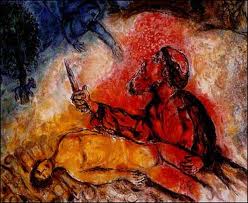
Okay, so here’s the scenario: You’re Abraham; you’ve been walking with God for a long time now. Years ago, God had promised you a son and he had finally been born. You’ve watched this child grow into a young boy, and then you hear God say, “Take your son, your only son—yes, Isaac, whom you love so much—and go to the land of Moriah. Go and sacrifice him as a burnt offering on one of the mountains, which I will show you.” Abraham is a wonderful example of what I mean when I say that worship is a life laid down, the place where sacrifice and obedience meet through our trust in the Lord.

Long before the birth of Isaac, God had called a man, then named Abram, to follow him. Abram was living in what we know as modern day Iraq, and if he was anything like the rest of his people, he was probably involved in pagan worship of the moon-god. The Bible doesn’t say that there was anything special about Abraham; it only says that God called him. The Lord told Abraham, “Leave your native country, your relatives, and your father’s family, and go to the land that I will show you…” That’s not a whole lot of information (“the land that I will show you”), but Abraham obeyed. Here we see one of the characteristic that would mark Abraham’s life- obedience.

Abraham then begins his journey with God, the Lord reveals himself to Abraham, continuously proves his faithfulness, and Abraham trusted him. Through all the events in Abraham’s life, his time in Egypt, his dealings with Lot, the War of the Kings, Sodom and Gomorrah, Hagar and Ishmael, and his dealings with Abimelech; a relationship was built between God and Abraham, and Abraham trusted him. The Bible says that God and Abraham were friends (James 2:23). Keep in mind, Abraham was not always perfect. If you read his story, you will find times in which he missed the mark, but his heart was one of trust and obedience with the Lord.

Now comes the day that God asks him to offer up Isaac as a sacrifice. Isaac is the promised child; the one God had told Abraham would be born so many years ago. And now, Abraham is told that he must give him up. What must have gone through Abraham’s mind? I’m glad you asked, because the Bible tells us. In Hebrews 11:19 we find, “Abraham reasoned that if Isaac died, God was able to bring him back to life again.” Do you see it? Abraham didn’t necessarily understand God’s motives, but he figured that God would evidently resurrect Isaac from the dead. No one else had ever come back from the dead. God had never demanded a sacrifice of this kind before. How could Abraham think, “I guess God is just gonna raise him from the dead?” It’s because he knew God and trusted him! Worship is that place where sacrifice and obedience come together through our trust in the Lord. Abraham’s life had been laid down before God long before the sacrifice of Isaac; he knew that he could trust God, so he obeyed him. That’s worship.

You know the rest of the story, how God provided a substitute to be sacrificed in Isaac’s place, and how eventually Jesus was born as one of their descendants. Can you see how this applies to you? You go through all kind of things in your life. Tragedy, sorrow, loss, victory, ups, and downs; God desires to draw you to himself in all of this. Like Abraham, you won’t be perfect, you’ll miss the mark, but God is still working to bring you to that place of intimate trust. Intimacy is the only way in which you will be able to offer up your “Isaac.”  You can’t truly worship someone you don’t trust. Oh, you can be religious, but true worship is a life laid down. Worship is more than just a little compartment in our lives as Christians.  True worship is the whole of one’s life laid down before God, where sacrifice and obedience merge because you trust the Lord.

Worship: A Life Laid Down (part 1)

I guess one thing we all have in common is that we tend to “compartmentalize.” I am not a psychologist (a few of my friends probably thing I need to see one though), but it’s my understanding that each of us separate thoughts and actions into “compartments” in order to cope with reality. Psychologists tell us that compartmentalization can be used as a defense mechanism, one that assists people in dealing with tragic occurrences in their lives. I’m one who would rather folks come to Jesus in situations like that, and let him actually heal and restore instead of simply tucking away the hurt, but that’s another conversation altogether. My point is that I think maybe we all do compartmentalize in one way or another, and I don’t think it’s always good. And, I think we as Christians tend to be among the chief “compartmentalizers.”

So many Christians separate their lives into compartments: this is work, this is family time, this is time with my friends, and this over here is my “God-time.” Our “worship services” are put into different compartments as well: this is worship time, this is offering time, this is prayer time, this is preaching time, and so on. Something that I have come to understand is that true worship is a life laid down. It’s the place where sacrifice and obedience meet through our trust in the Lord. There is no need for compartments-Jesus is my life. If you look into the Bible you’ll find many references of people who wanted to be religious, who kept offering up sacrifices, but whose lives were compartmentalized to the point that they did not understand that their disobedience revealed the fact that they were not true worshippers of God, that they did not truly know him.

          King Saul is a good example of someone who didn’t understand that worship is a life laid down. You may recall that Israel had wanted a king.  Saul, who the Bible describes as tall and handsome, was anointed the first King of Israel. You can see from the beginning that it appears that Saul only had a relationship with God when someone else was around (good observation Mike). The only time you see him interacting with the Lord is when he was the prophets of Gibeah, or with Samuel the prophet. In fact, if you read on in the Old Testament you’ll discover that during the reign of Saul, the Ark of the Covenant (representing God’s presence) was not sought at all. Saul never came to know the Lord.

In I Samuel 15, Saul had been commanded by God to utterly wipe out the Amalekites- I mean utterly. However, Saul decided to spare their king along with the choice livestock to “sacrifice to the Lord.” When the prophet Samuel arrived, Saul rushed out to meet him proclaiming, “I have obeyed the commandment of the Lord!” Samuel asks, “Well, what’s up with all the sheep I’m hearing?” Saul replies, “Oh, we only spared the best of the sheep and the oxen for God, but we destroyed everything else.”

Samuel then proceeds to rebuke Saul, reminding him of how God had made him king, and asking him how he could not then obey the Lord’s commands to utterly wipe out the Amalekites. Saul persists, “But I did obey the Lord. I have brought Agag the king, and destroyed everything else. Only the best part of the spoil was saved to sacrifice to the Lord.” Samuel replies,

“Has the Lord as great delight in burnt offerings and sacrifices,
as in obeying the voice of the Lord?
Behold, to obey is better than sacrifice,
and to listen than the fat of rams.

 For rebellion is as the sin of divination,
and presumption is as iniquity and idolatry.”

Rebellion is an act of usurping an authority, in this case God. Samuel said that rebellion is similar to witchcraft or divination. How’s that? Well the ultimate goal of witchcraft is to manipulate events. The sorcerer seeks to manipulate spiritual forces so that a desired result will be manifested in the physical. When Saul rebelled against God, he was taking matters into his own hands in an attempt to bring about the outcome he thought was best. He wanted to exercise authority. God had spoken, but he rejected his authority and chose his own way.

Samuel went on to say that stubbornness or insubordination is like idolatry. Say what? Well, when we rebel against God, stubbornly pushing against him, or trying to push him to do what we think is best; we are setting ourselves up as God- idolatry. (Oh, I forgot to mention the fact that just before his meeting with Samuel, Saul had set up a monument to himself in Carmel.) In his stubbornness, Saul had declared, “I am god!” His rebellion and stubbornness blinded him to the reality of his disobedience.

Okay, so how does all of this apply to us? The reason Saul, and we as well, are rebellious and insubordinate towards God is because we don’t trust him. God is working in the events of our lives (even the hard ones) to help us get to know him and thereby trust him. He wants us to listen to his voice, lay down our lives and surrender to him, not just offer up what we think he wants. As we learn to trust the Lord, our sacrifices and obedience come together in a life laid down. Saul never learned that. God used him, he won many battles and was the champion of Israel, but; he never came to trust in the Lord. God had a little compartment in Saul’s life to live in, and he only got to come out when Samuel was around. Saul only sought to manipulate God through offering up the sacrifices he thought would push God towards doing what he wanted Him to do. And in the eyes of God, this was akin to witchcraft and idolatry.

We, here in the West, consider ourselves far too civilized and advanced to worship some kind of idol made of wood or stone, instead; we have proclaimed ourselves as god. Even we who name the name of Jesus are guilty of creating a god after our own likeness and worshipping it instead of the true and living God. We have invented a god who is okay with our witchcraft and idolatry, one who winks at our rebellion and insubordination. We have turned his grace into a license to sin. Like Saul, we offer God our disobedience as a sacrifice, and cry foul when he demands our lives instead. True worship is not simply an act that we perform. True worship is born out of our trust in God. True worship is the place where our sacrifice and obedience come together, expressed in a life laid down.

To be continued… (Next, we look at Abraham.)

(By the way, Christians, we need to repent of reading horoscopes and the little magic emails that guarantees a “blessing” if you just forward it to ten people. That’s straight up witchcraft-just saying)

EAT MOR GEEZUS

It may seem strange, but all of this hoopla surrounding Chick-fil-a, and the reaction of many within the church makes me think about the topic of “glory.” As I see Christians “take up arms,” lifting their voices in anger and protest; it makes me think that perhaps we have become  confused as to our call to glorify God. It seems that the so called American Christian Patriot has the mistaken idea that somehow glorifying God means standing up for your rights and showing the government that, “We are the glorious church and we’re not going to take your abuse anymore!” I believe many of us have forgotten that the ultimate symbol of glory is the cross.

This morning I am reminded of the time that Jesus told Peter and the rest of the disciples that he must go to Jerusalem where he would be handed over to the Gentiles and be put to death. Peter said, “No Lord. This will never happen to you!” Jesus’ response was, “Get behind me, Satan! You are a hindrance to me. For you are not setting your mind on the things of God, but on the things of man.” Peter, at that point, still didn’t understand that Jesus had come to glorify the Father and be glorified himself through his suffering on the cross. It would seem that the American Christian Patriot, like Peter in that instance, cannot grasp the fact that it was in the act of submission and suffering that our Lord demonstrated the glory of God.

I recall the story in the book of Acts when some of the Apostles were taken into custody, beaten and told not to preach Jesus anymore. The church’s response was to gather together and pray. When the men were released from jail, they didn’t march around protesting unfair treatment, hire a few lawyers, and demand that they be given the right to preach what they wanted to. No, they thanked God for the privilege to suffer on account of the name of Jesus, asking God to move and give them boldness to preach no matter what. They understood that it was through their suffering that God’s grace was poured out and his name glorified. Peter, who was one of the Apostles in the story, went on to write, “But if when you do good and suffer for it you endure, this is a gracious thing in the sight of God. For to this you have been called, because Christ also suffered for you, leaving you an example, so that you might follow in his steps. He committed no sin, neither was deceit found in his mouth. When he was reviled, he did not revile in return; when he suffered, he did not threaten, but continued entrusting himself to him who judges justly.” Poor misguided Peter, I guess he was simply confused.

Perhaps the American Christian Patriot has forgotten that in the book of Hebrews some of the champions of faith are described as those who “were tortured, refusing to accept release, so that they might rise again to a better life. Others suffered mocking and flogging, and even chains and imprisonment. They were stoned, they were sawn in two, they were killed with the sword. They went about in skins of sheep and goats, destitute, afflicted, mistreated— of whom the world was not worthy— wandering about in deserts and mountains, and in dens and caves of the earth.” What fools they were. Didn’t they know that they should have stood up for their rights?

American Christian, please consider the possibility that perhaps we have confused patriotism with Christianity. Could it be that we have mistakenly equated the glory of God with the “American Dream”? Have we forgotten that we are called to be slaves (yes SLAVES) of Jesus Christ, and that our only “right” is to glorify our Master? I understand that we Americans have been told all of our lives that we must stand up for ourselves and fight for our rights, but Christian, please hear me; does that mindset honestly exemplify the nature of Christ? I believe with all of my heart that the American Christian needs to be wary of this blending of faith and political power. Brothers & sisters, we are not called to be patriots, instead we Christians have been called OUT OF every nation, kindred, tribe, and tongue in order that we might glorify the name of him who transferred us out the kingdom of darkness into the kingdom of his beloved son.

Election: An Issue of Perspective (Can We Please Move On?)

Something I’m asked quite frequently is my position concerning election- does God sovereignly  choose who gets saved or is man’s free will involved? More often than not I respond with, “Great day man. Is that all you’ve got? Can we please move on?” While there are a thousand different topics I can think of that I believe are far more relevant for us to be talking about, I decided to put my thoughts down in hopes that perhaps someone may be  encouraged in the Lord or perhaps challenged. Alrighty then; here we go.

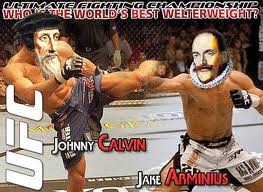
Calvinists and Armenians, whether by their own volition or some secret decree (that’s supposed to be a joke), are comprised of individuals adamant as to their respective doctrines concerning election. I believe that this stringency, in many cases, has resulted in men becoming more interested in proving each other to be in error than in the furthering of the Kingdom of God. The perspectives of many have become distorted and clouded in the mist of contention. And it is perspective itself which must be considered, in my opinion, when one seeks to understand the biblical doctrine of election. In that man is creature and not creator, the ability to completely perceive as God perceives is, without question, impossible. Yet, to understand divine providence, one must attempt to see things the way God sees them. The sovereignty of God and the free will of man merge into a natural, yet incomprehensible synthesis as they are both absorbed into the perspective of the divine.

The Bible teaches that God is an eternal being without beginning or end. For God, there was no then,  and there is no tomorrow. The Almighty inhabits the realm of now in which there was never a moment at which He comprehended. He is the great I AM. We are told that God is the One who declares the end from the beginning (Isa. 46:10). The terms end and beginning are not meant to be understood as applicable to God’s perspective, rather they are used to communicate divine perspective to a finite, “time-bound” creature.

Within the Bible there are various passages that give insight into the divine perspective. One finds in the book of Revelation that Jesus was/is “the Lamb slain before the foundation of the world” (Rev. 13:8), yet, “in the fullness of timehe appeared upon the earth (Gal.4:4).  David claims that the Lord had ordained all the days of his life before he was ever born (Ps. 139:16).  One repeatedly finds instances contained in scripture in which God is depicted as having intimate knowledge of an individual prior to their birth (Jer. 1:5). Still, there was a time and place that their lives were manifested upon the earth, that which God knew completely from all eternity realized in time and space. These are only a few among the many  scriptures that give a glimpse into the eternal divine perspective.

I believe that God created all things in one “motion.” There was no beginning or end, no point at which it all started. To limit God to a point would be to confine Him to space and time thus rendering Him not God. There was never a moment, much less a moment in which He did not fully and completely have intimate knowledge of all that would be- the Lamb is slain, all who would be saved are, all who will be lost are. The divine perspective requires no point in time in which man chose or rejected, and I think  that “election” and “free-will” are time- space oriented discussions we have in an effort  to explain the physical manifestation of the divine perspective invading a created reality.

Well, that’s my two cents regarding election.  Let me add that I think that it is to our shame that so many within the church have become worshipers of men and the doctrines of men. Don’t get me wrong, we are told in scripture to have sound teaching, and the importance of that cannot be stressed enough. It’s only that so many can quote verbatim the various tenets of their favorite theologian, but when you ask them what the Lord has spoken to them recently, they look at you as if you are insane.  Pardon my English, but that aint cool. Sadly, for so many who claim to be Christian, knowing Jesus is just an academic exercise. Perhaps it is the lack of true intimacy with Jesus that has lent  to all of this empty pursuit of what we falsely call knowledge. What I mean is, if you aren’t really captivated and enthralled by Him; I guess you have to spend your time doing something. Listen, I am a student of theology and don’t believe for a second that you are required to discard your brain when you come to Christ. However, if all your “knowledge” isn’t moving you to closer intimacy with Jesus, it’s worthless!

The church owes much to theologians like Calvin and Arminius, men who spent their lives in diligent study of the Bible and the formulation of theology. However, in the end, even the greatest minds are limited in their perspective. May our perspective be that which comes from having our eyes fixed on Jesus, and not merely from having to prove a point.

(Oh, so you’re not satisfied. Which is it you ask, the sovereignty of God or man’s free will? Well, the answer is yes.)

Discernment & Priorities

Those who know me know that I believe a Christian is to influence his culture by preaching (preach the gospel, use words when necessary) the gospel. I believe that cultures and nations for that matter are transformed through the establishment of the kingdom of God within the lives of people transformed by Jesus, rather than by so called Christian political activism. However, I must say that through the political process, at least the priorities and lack of discernment of many who name the name of Jesus is being revealed.

Some support a candidate merely because he is of their same ethnic/racial orientation. And sadly, there are some who will oppose a candidate because he is not of their race. They have forgotten or perhaps never learned that “in Christ,” there is no Jew, Greek, nor White, or Black. This choosing of a candidate because “He is one of our people,” or rejecting him because he is not reveals a carnal disposition. Let us repent and seek forgiveness and healing. Christian, we are not called to be “strong, proud white men” or “strong, proud black men”; we are the body of Christ and joined together as one new man in Jesus. Will you not just be a “Jesus man”?

Some Christian political activists assert that President Obama is a closet Muslim or perhaps even the antichrist. They fear that he and the left are doing all they can to destroy Christianity and destroy the United States. Strangely, their solution is to join forces with another candidate whose religious beliefs are cultic in their origin. Christian, how much have you studied Mormonism? What would cause a Christian to reject one candidate on the grounds that he is not Christian and bent on destroying the nation, and then choose another candidate who is not Christian and trust him to save the nation? Could it be lack of discernment and misplaced priorities? I shudder at the thought of even deeper implications.

Brothers and sisters, for you, as Christians; the answer is not to be found in a political party or candidate. Our hope is in the Lord. Let us not be like the ancient children of Israel, who when faced with God’s judgment sought after political alliances with the nations, believing they could save themselves and their nation by the arm of the flesh. Instead, let us repent of our idolatry, of murdering our babies, cheating on our wives, spending hours looking at porn on the internet, getting high, etc…   Let us prayerfully search the scriptures, and cry out to the Lord that he may give us his priorities and true spiritual discernment for this hour. Let us wait before him on our knees until he fills our hearts with prayers birthed by his Spirit. Let us deny ourselves and take up our cross. Let us extend Jesus to a lost and dying world.

With This Ring (conclusion): The Holy Spirit as our “Arrabon”

(In the final installment of this series, we take a closer look at the “engagement ring” the Church has been given in the person of the Holy Spirit.)

It is important to keep in mind that until the time of Christ, the Jews had only known the Holy Spirit as an impersonal, invading force. He was seen as the mysterious power of God who, at times would come upon an individual in order to equip them for a specific purpose during a limited amount of time. The Jews looked upon the Holy Spirit as the mysterious ruach, the breath and wind of God. He was, to Jew, the active power of the Lord God.[1] The Jews knew that there would come a day in which the Lord God would “sprinkle them with clean water, and put his Spirit within them” (Ezekiel 36), but they had no conception as to the intimacy this indwelling Spirit would represent. But now, Messiah had come, the spirit-man had been revealed as the unique dispenser of the very Spirit of God; and, the Holy Spirit would no longer be seen as the raw, naked power of God, he would be forever clothed with the personality and character of Jesus.[2]

Paul had now come, having received the revelation that this Holy Spirit was the “other” Comforter and Teacher that Messiah had promised, and he is given to those who believe, Jew and Gentile alike, as an arrabon, assuring them that God would indeed be faithful to bring about a complete consummation of all he had promised. Because of this arrabon the very love of God had now been “shed abroad” in their hearts; they had received the Spirit of adoption which created within them a desire to cry out, “Abba.” This same Spirit would bear witness within their own hearts that they were indeed children of God. The Spirit, who had been given to them as an arrabon, would comfort them and teach them, his presence within them providing assurance as to the complete redemption “of God’s own possession, to the praise of his glory.”

The Spirit has been given as a pledge or deposit guaranteeing the full realization of God’s redemptive purposes. One could say, in light of what has been discussed in the writing at hand, that the church has been given a wonderful engagement ring by her Lord. For our purposes let us imagine that this ringis a magnificent four carat arrabon and that each carat represents four different aspects of the arrabon in relation to the believer.

The first carat represents the adoptive aspect of the arrabon. Although it was uncommon for Jews to practice such adoption, it was nevertheless common for the emperors of that period to adopt from outside their immediate family and acquire a successor in this way. Our arrabon accomplishes and provides to the believer sonship and all the advantages that go along with it.

The second carat is complete assurance that the believer does indeed belong to Christ. This carat speaks of belonging and provides evidence to the believer and those on the outside that he is the property of God; and as the arrabon proves the reality of the relationship of the recipient to the giver of the arrabon at the present, it proves that the relationship will be consummated in the future.

The third is an aspect of “first fruits”. Christ has risen from the dead and the believer has promise that he himself will share in this glorious resurrection in which mortality is swallowed up by immortality.

Finally, the arrabon is assurance itself. The Holy Spirit is in the believer and he speaks of Christ with absolute assurance and conviction. This assurance is beyond mere intellectual affirmation; instead, the arrabon is an absolute convincing experience, alive within the believer.[3]

The New Testament refers to the church as the bride of Christ; and, her beloved has provided her with the most glorious arrabon ever to be received. As she waits for her husband to return and receive her unto himself, as the wedding day is delayed and times become dark and discouraging, she has only to look upon the arrabon to be assured of his love and faithfulness; and, the cry of her heart becomes, “The Spirit and the bride say come.”


 1. Michael Green, I Believe in the Holy Spirit (Grand Rapids, Michigan: William B Eerdmans Publishing Company, 2004), 20-36.

2. Ibid., 50.

 3. Ibid.,100-102.